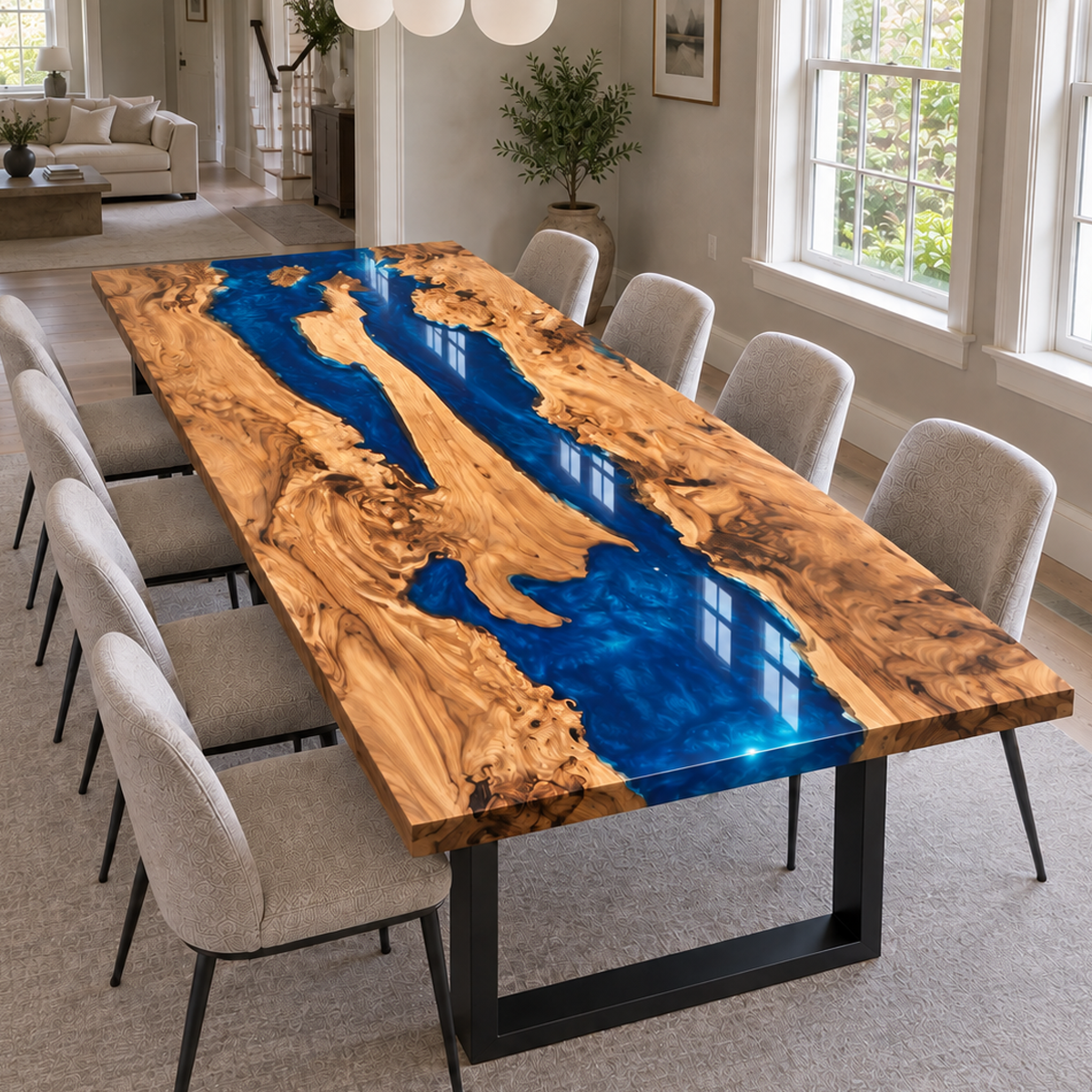
A resin dining table brings several visual elements into the room at once: wood grain, resin color, an edge profile, and a base. Choosing chairs becomes easier when you decide which of these elements should lead the design. Begin with a small set of references from the wood and epoxy dining table collection and compare them with your existing room.
Start with the materials you are keeping
Photograph the floor, wall color, lighting, and any sideboard that will remain. If possible, keep actual samples beside the table references. Check them in the dining area during daylight and under the lighting used for dinner.
A screen can help you shortlist options, but it cannot establish an exact color match. Use an available sample or a confirmed material reference when the relationship between colors is important to your design.
Choose how the chairs relate to the table
Chairs can echo the table base, introduce a softer material, or repeat a small part of the resin palette. They do not need to copy every color. For an expressive tabletop, one option is to keep upholstery and chair frames relatively simple so that the grain remains easy to see.
Compare chairs from more than one angle. A high back changes the view from the doorway; a broad upholstered seat changes the amount of open space around the table. Check chair arms and the proposed underside of the table as well as their visual relationship.
Use the resin color with intention
The olive wood dining table with bright blue resin is a reference for a strong blue accent alongside patterned wood. If a vivid resin color is your focal point, try repeating it in one small room detail before introducing several competing accents.
Alternatively, let the wood relate to the flooring while the resin creates contrast. Compare the direction and scale of grain patterns rather than expecting different wood surfaces to match exactly. The goal can be a coherent relationship, not identical coloration.
Leave visual space around the surface
Test a centerpiece on the table reference. A low, simple arrangement may preserve the view of the river pattern better than several decorative objects. Think about where serving dishes and place settings will sit during a meal, so that the styling still makes sense when the table is in use.
Lighting is part of the composition. Observe where a pendant sits in relation to the tabletop and how the finish looks from a seated angle. Confirm finish options for the actual design instead of inferring them from an image.
Combine appearance with a practical check
Use the dining table measuring checklist before treating your palette as a final specification. Collect chair details and room measurements alongside the material references. If a particular resin color or base is essential to the design, check its availability with Woodzio for the configuration you are considering.


