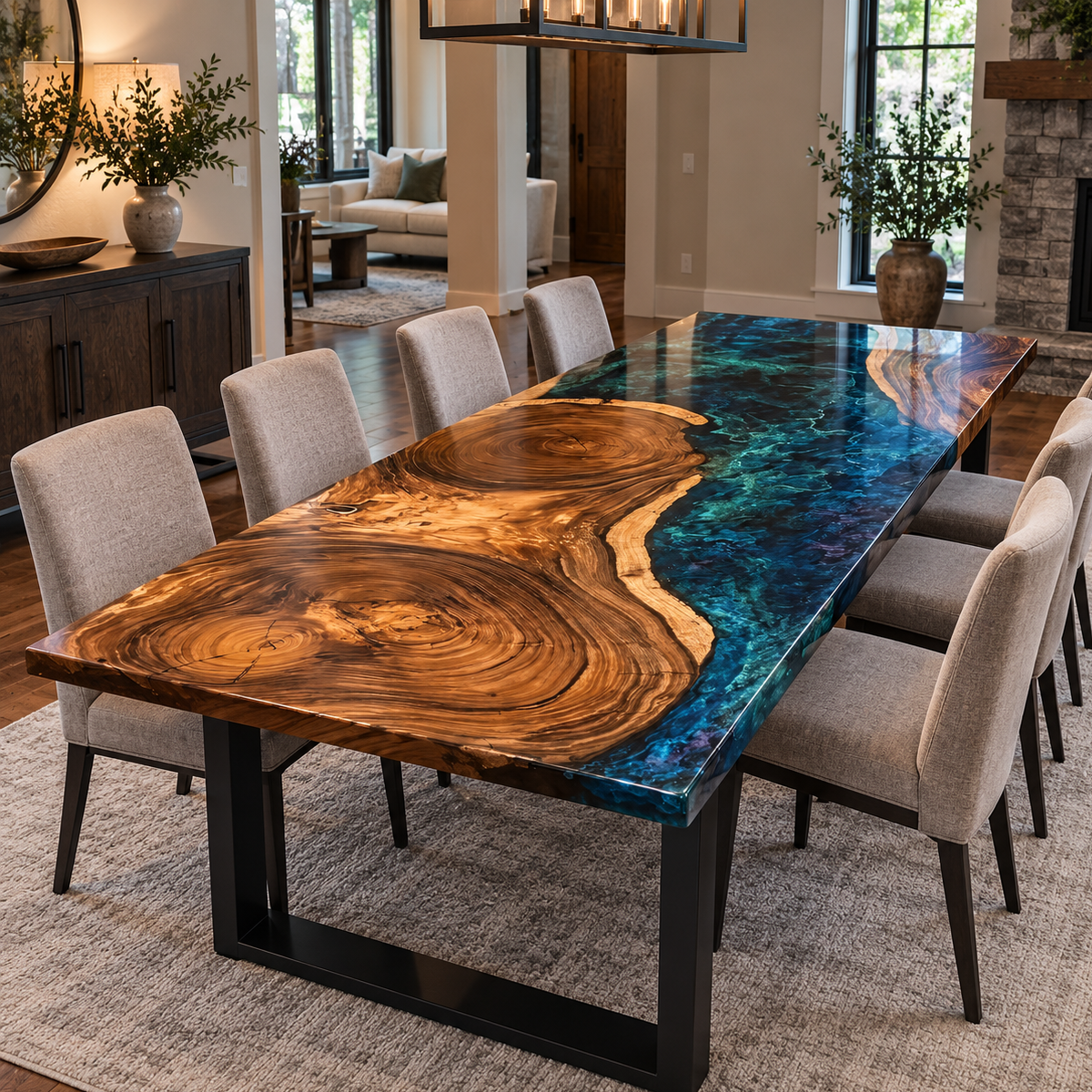
A dining table should feel comfortable on an ordinary evening as well as when guests arrive. Before deciding which custom wood and epoxy dining table appeals to you, look at the daily movements around your dining space. The right layout starts with your room, your chairs, and how you use the table.
Measure the space that remains available
Record the room dimensions, then add the furniture that will stay: a sideboard, shelving, a bench, or nearby kitchen cabinetry. Include doors that swing into the room and drawers that open toward the dining area. The empty floor plan and the usable dining area may be quite different.
Identify the routes people take during a meal. Someone may carry dishes from the kitchen, pass behind a seated person, or reach a storage cabinet. Test those movements with the furniture in place instead of deciding from the tabletop outline alone.
Try the outline with your actual chairs
Use removable tape to mark a possible tabletop shape. Put your chairs around it and sit down. Check the position of chair arms, the space for feet, and what happens when a person stands up. If you are buying new chairs, collect their measurements before finalizing the table.
A base that looks compact from above may occupy important space underneath. Ask to review the top and base together. Avoid relying on a generic seat count without checking the proposed dimensions and chair arrangement.
Make room for the way you serve meals
Think about what normally sits on the surface. Shared serving dishes, place settings, a centerpiece, and homework materials all change how much clear space you want. List the items used most often and test their arrangement on an existing surface or a paper layout.
The black walnut and galaxy resin dining table offers a visual reference for a rectangular top with expressive wood grain and blue-green resin. Its appearance can help you describe a design preference, while the practical layout still needs to be checked for your room.
Balance the table with the rest of the room
Look at the proposed table from the kitchen, doorway, and main seating positions. Decide whether you want its resin pattern to be the strongest visual element or one part of a quieter room. Keep a reference for your floor, chairs, and wall color beside the table image.
Our guide to pairing an epoxy dining table with chairs and room colors takes this visual review further. A coordinated palette is easier to judge once you know which tabletop size and base arrangement are practical.
Confirm the final configuration
Bring your measured plan, chair details, and serving preferences to the custom table inquiry. Ask which dimensions and design options are available, and review the agreed configuration before ordering. Your everyday routine is the most useful reference for deciding whether the table belongs in the space.


