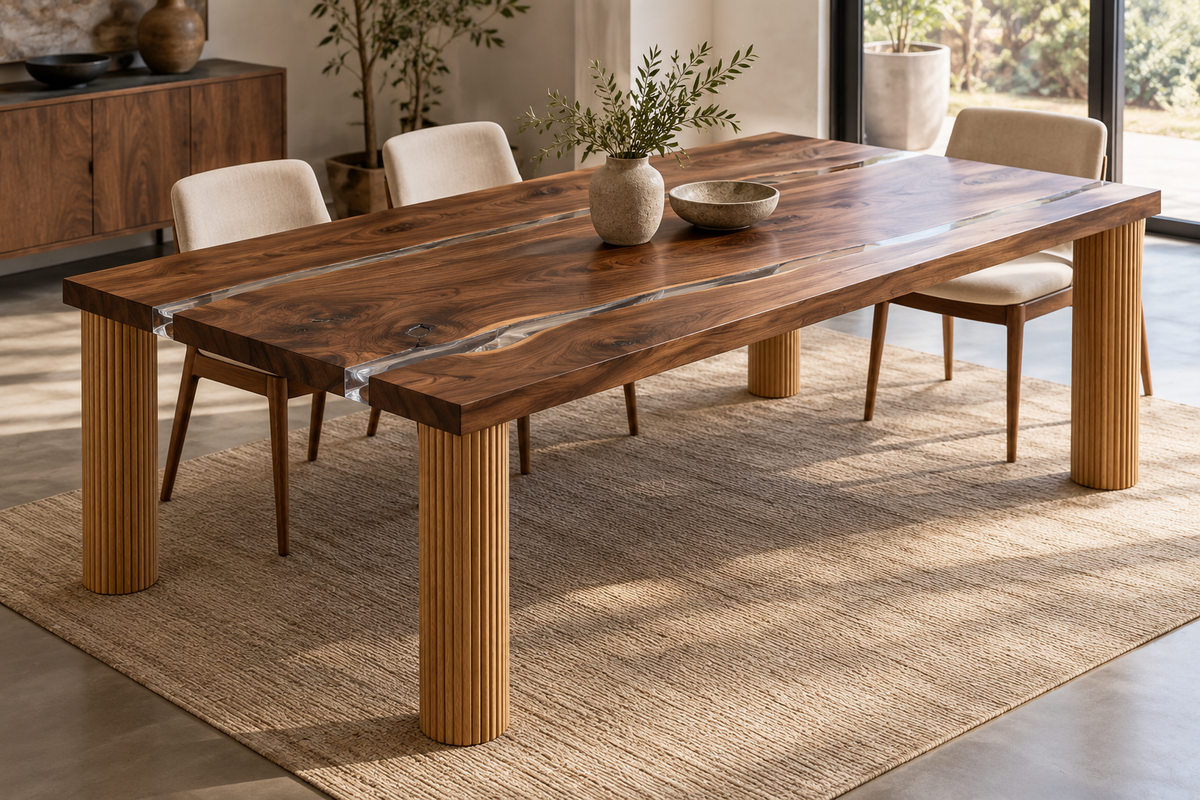
One person wants a quiet wood-led table. Another likes a bold resin feature and a sculptural base. Choosing a custom epoxy dining table together does not have to mean settling on an indistinct compromise. A shared brief can reveal which preferences are essential, which are flexible, and which belong to different parts of the design.
Try the following exercise before collecting more inspiration images. Its purpose is to give the maker a clear direction and to help both people understand the choices being made.
Write the practical requirements together
Start with the room, regular seating, chair dimensions, walking routes, and delivery access. Add a budget range and any date you would like to discuss, without treating the date as a confirmed production promise.
These requirements establish the boundaries of the project. If a dramatic shape makes the room difficult to use, it is a practical conflict to resolve before debating color. Keep the agreed measurements separate from the style discussion. You might use a black walnut island epoxy dining table as one reference and note precisely which part appeals to each person, rather than asking the maker to reproduce every feature.
Choose three references each
Limit the collection so the important preferences stay visible. For every image, write one sentence identifying the feature you like. “The wood remains the main surface” is more useful than “I like this table.” “The base feels sculptural” is more useful than asking for the entire photographed room.

Also note anything you do not want from the same image. A reference can contain a helpful resin layout and an unsuitable size. Explicit notes prevent those unrelated details from becoming accidental instructions.
Separate the table into decisions
Review shape, wood composition, resin area, color direction, edge profile, and base one at a time. This often reveals room for agreement. A restrained resin area can coexist with a more expressive base; a strong wood pattern can sit within a simpler outline.
Do not force every preference into one design. Ask whether each added feature helps the overall composition. A custom table still needs a clear visual idea rather than a checklist of competing statements.
Rank the priorities
Each person chooses two essential preferences and two flexible ones. Compare the lists. Where two essentials conflict, discuss the effect you are seeking rather than defending a particular photograph.

For example, “quiet” might mean less resin, fewer colors, or a simpler base. “Distinctive” might mean a natural slab arrangement rather than a brighter resin. Describing the desired effect can uncover a shared direction that neither reference showed exactly.
Send one brief and review one version
Combine the practical requirements, selected references, and agreed priorities into a single document. Identify one place for consolidated feedback so the maker does not receive contradictory approvals from different messages.
Ask how the actual slab, final layout, and other details will be reviewed. Save the agreed version and list unresolved questions before approving the design.
Send WOODZIO one dining-table brief containing the room plan, chair measurements, selected references, and shared priorities. Ask how the actual slab and final configuration will be reviewed before approval. A shared brief gives the project a coherent direction while leaving room for the natural character of the wood.


