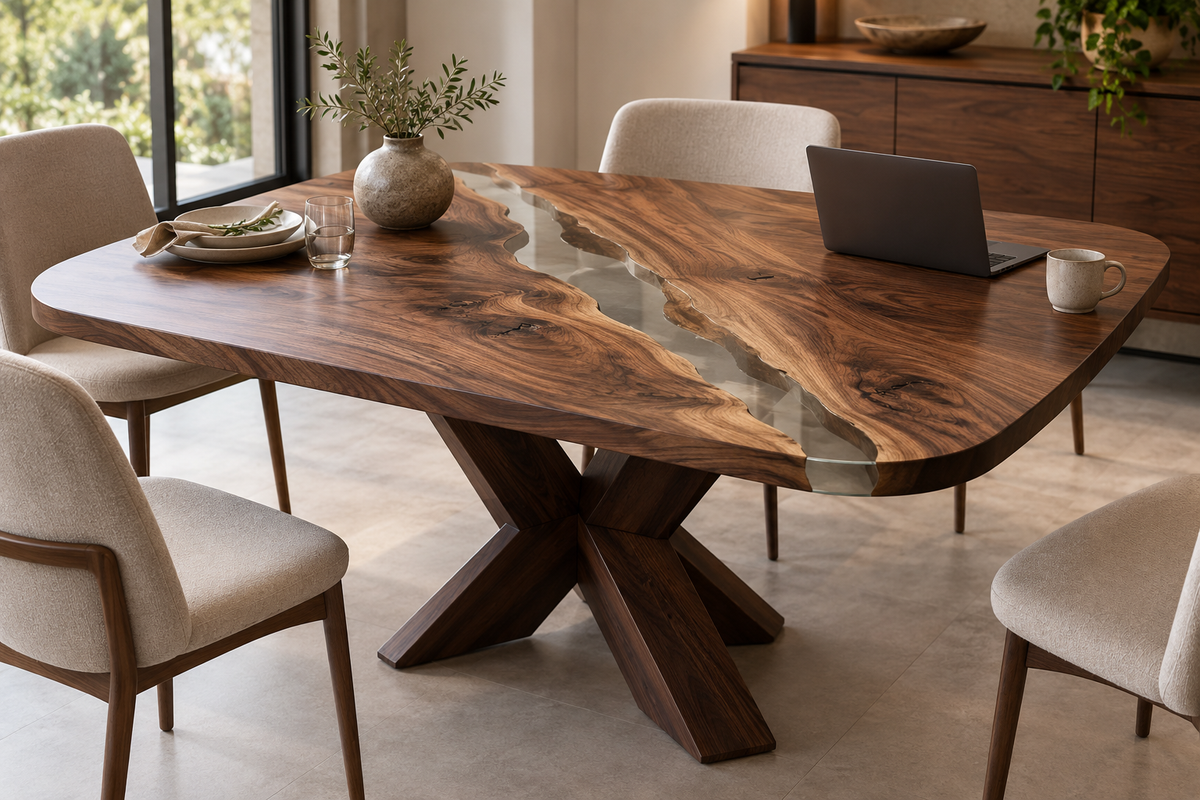
When one room handles work and meals, a dining table becomes more than a place to eat. It holds the laptop in the morning, paperwork in the afternoon, and dinner in the evening. An epoxy dining table can give that shared room a strong visual center, but the success of the arrangement depends on how those routines fit together.
Plan the transitions as carefully as the tabletop. A surface that is convenient for working but difficult to clear can leave the dining room feeling permanently occupied by the workday.
Morning: define a working zone
Place your usual equipment inside a full-size table outline. Include the chair, screen position, notebooks, and the space where cables will run. If two people work there, test both positions at once rather than assuming they can share the same central area.
Use the furniture you expect to sit on. A dining chair that feels fine during a meal may not suit your longer work sessions. Assess your comfort and equipment arrangement before treating the table as a daily desk replacement. A black walnut clear epoxy dining table can supply the dining-room reference for your plan; test the work equipment separately instead of assuming the tabletop alone resolves both routines.
Midday: keep shared functions possible
Ask what needs to remain available while someone works. Another household member may need a place for lunch, or the room may form a route to the kitchen. Establish a work footprint that leaves those functions practical.

Avoid letting equipment spread across the entire surface by default. A small removable organizer can define the work zone and make it easier to clear. Check any protective mat or organizer base against the table maker's care guidance for the actual finish.
Late afternoon: give everything a destination
Choose storage close enough that clearing the table is a short task. A drawer, cabinet shelf, or dedicated box can hold the items used each day. Include a place for chargers so unplugging does not leave cables lying across the floor.
Decide what remains on the table between uses. If a monitor will stay in place, include it in the dining layout. If it will be moved, confirm a safe, convenient place to put it. A plan that depends on carrying equipment through several rooms may be harder to maintain.
Evening: restore the dining surface
Remove work items and clean the table using the finish-specific instructions. Protect the surface from hot items using the method the maker recommends. Do not assume that the resin name describes the heat tolerance of the complete finished table.

Set out a normal meal during your layout test. The space that comfortably held a laptop may need a different arrangement for serving dishes, glasses, and several seated people.
Design around the handover
The brief should state your regular seating, work equipment, storage position, and how often the table changes roles. Include the room's outlet locations and the walking routes that must remain clear.
Send WOODZIO the tested dining layout, chair measurements, work equipment list, and storage plan. Describe dining as the table's primary role and identify any work requirements that need confirmation. A shared table works best when the handover between routines is practical.


