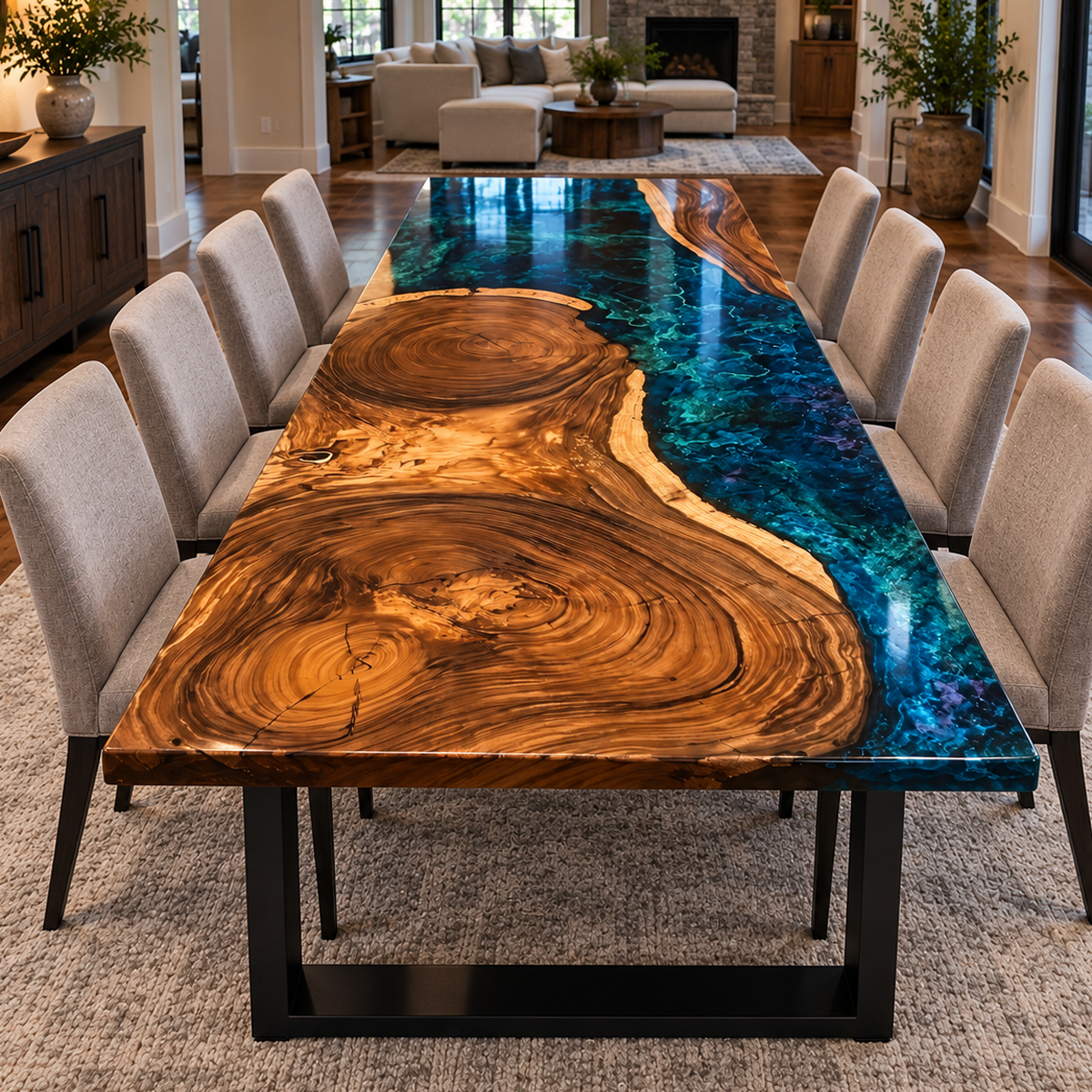
Measurements are most helpful when they describe how a dining table will be used. A room length and width are a useful start, but chair movement, nearby furniture, and access into the home can change the decision. Use this checklist before selecting a configuration from the custom wood and epoxy dining tables.
1. Measure the room and fixed obstacles
Sketch the dining area with doors, windows, radiators, counters, and built-in storage. Mark the furniture you intend to keep. Record measurements directly on the sketch and identify the units clearly.
If a wall is uneven or a doorway is positioned at an angle, show it rather than simplifying the space into a perfect rectangle. Photos from opposite corners help explain the measurements, although they should not replace them.
2. Record the chairs you plan to use
Measure the chair's overall width and depth, seat height, and arm height where applicable. Note whether chairs need to tuck under the table and how far back they move when a person stands. Existing chairs are especially useful for testing a proposed outline.
Ask to compare these measurements with the proposed table height and underside clearance. Check the base position at each planned seat. A tabletop dimension by itself does not confirm a comfortable seating arrangement.
3. Test a full-size footprint
Mark the proposed top with removable floor tape. Arrange the chairs, sit down, and walk the routes between the kitchen, table, and storage. Try opening nearby doors or drawers while a chair is occupied.
For a step-by-step layout review, see planning a dining table around your everyday space. The aim is to identify questions while the shape is still easy to adjust.
4. Check the access route
Record the clear openings and turns along the route to the dining area, including any stairs or lift. Flag handrails, narrow landings, and other obstacles. Share these notes for an access review rather than assuming the table can be carried in fully assembled.
Do not estimate the weight or delivery method from photographs. Ask for the relevant details of the proposed piece and the arrangement agreed for your order.
5. Add the design references
The black walnut and galaxy resin dining table can be used to describe a preferred wood-and-resin composition. State which details matter to you and which are flexible. Separate those preferences from confirmed dimensions so that an attractive reference does not become an accidental specification.
6. Resolve the open questions
Bring together the measured sketch, chair details, access notes, and material preferences. Send them through the custom table inquiry page and ask which options can be provided. Review the final dimensions, base, finish, and care information with the agreed design before placing the order.


