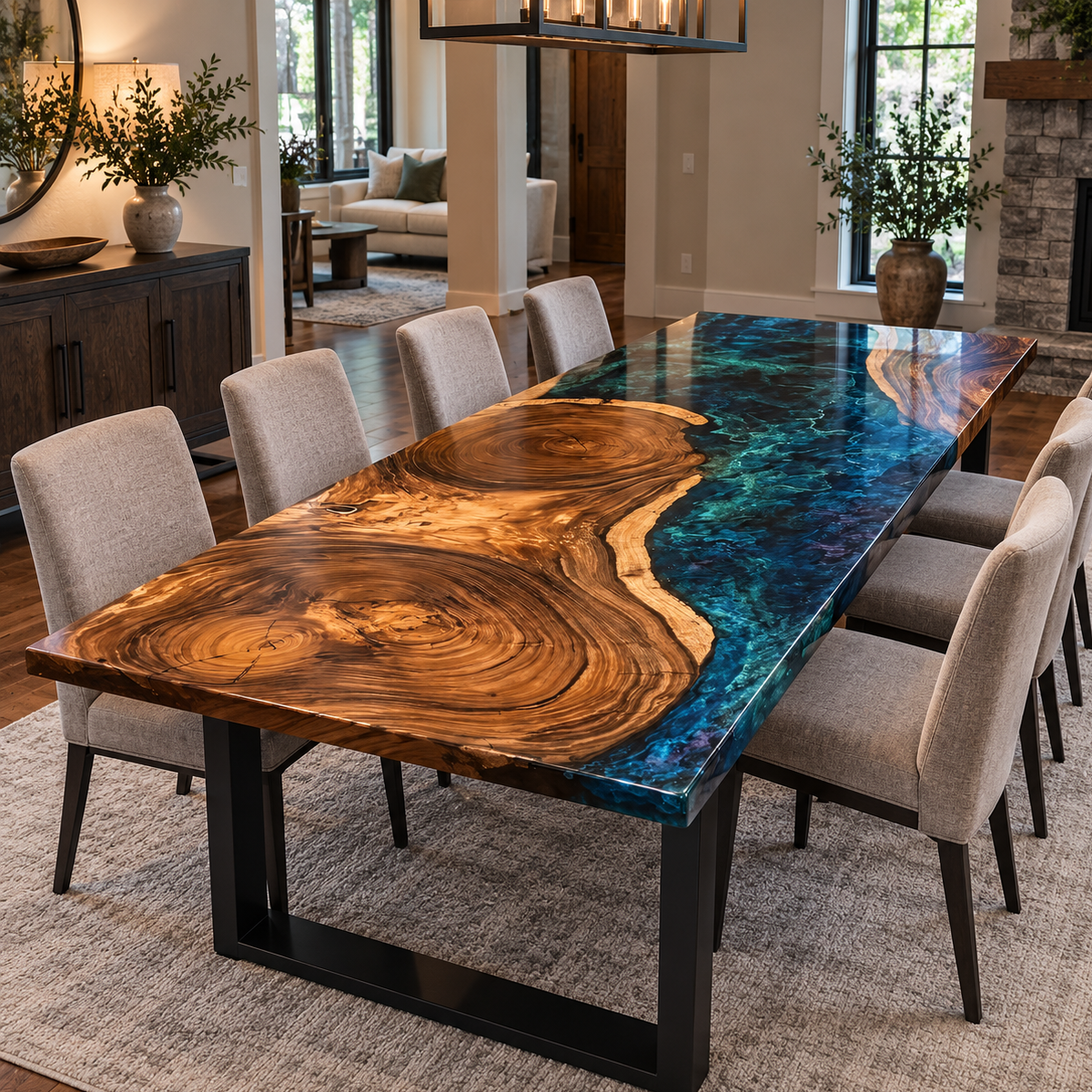
Wood and resin furniture can connect different parts of a home without making every room look identical. The useful starting point is a shared material direction: an overall wood tone, an accent color, or a relationship between natural grain and simpler surrounding surfaces. Each room can then interpret that direction in its own way.
Build a palette from the home you have
Gather references for the floors, walls, upholstery, and furniture you intend to keep. Look at them together before adding a new resin color. Decide which materials already give the home its character and which areas would benefit from a new focal point.
The aim is a relationship between pieces, not a promise of identical wood grain or color. Images help you explore possibilities, while samples and confirmed product details are more useful when a precise material match matters.
Vary the intensity of the pattern
If one room has a broad, expressive resin river, an adjacent room can use a quieter composition that repeats only part of the palette. Try varying the amount of resin, the scale of the grain, or the simplicity of surrounding fabrics rather than repeating the same pattern everywhere.
For example, browse the wood and epoxy dining tables as possible dining-room focal points. Compare them with the actual chairs, lighting, and floor, so that the table's visual role is clear within that room.
Connect rooms with one or two details
A resin accent might be repeated in a small textile, while a base color relates to other furniture frames. Those modest connections can help the home feel coherent without filling it with matching objects.
In the living area, compare the wood and epoxy coffee tables with the sofa fabric and rug. Their role is different from a dining table's: they sit closer to everyday objects and are usually viewed from a lower seated position. Keep that difference in mind while coordinating the palette.
Give each piece a practical role
A cohesive room still needs a workable layout. Record what each piece will hold, which seats use it, and how people move around it. Test proposed outlines with the furniture you are keeping before treating a visually appealing composition as a final arrangement.
Separate the measured requirements from the style references. This makes it easier to change a resin color without losing track of the room's practical needs.
Choose and care for the materials thoughtfully
Use the Woodzio buying guide to review material and design references, then confirm the options available for the actual piece. Avoid assuming that all finishes or configurations are interchangeable.
Once the furniture is in use, a consistent care routine helps you look after it. Our wood and resin furniture care checklist brings together surface protection, gentle cleaning, and the questions to ask about the agreed finish. A coordinated home works best when appearance, use, and care are considered together.


