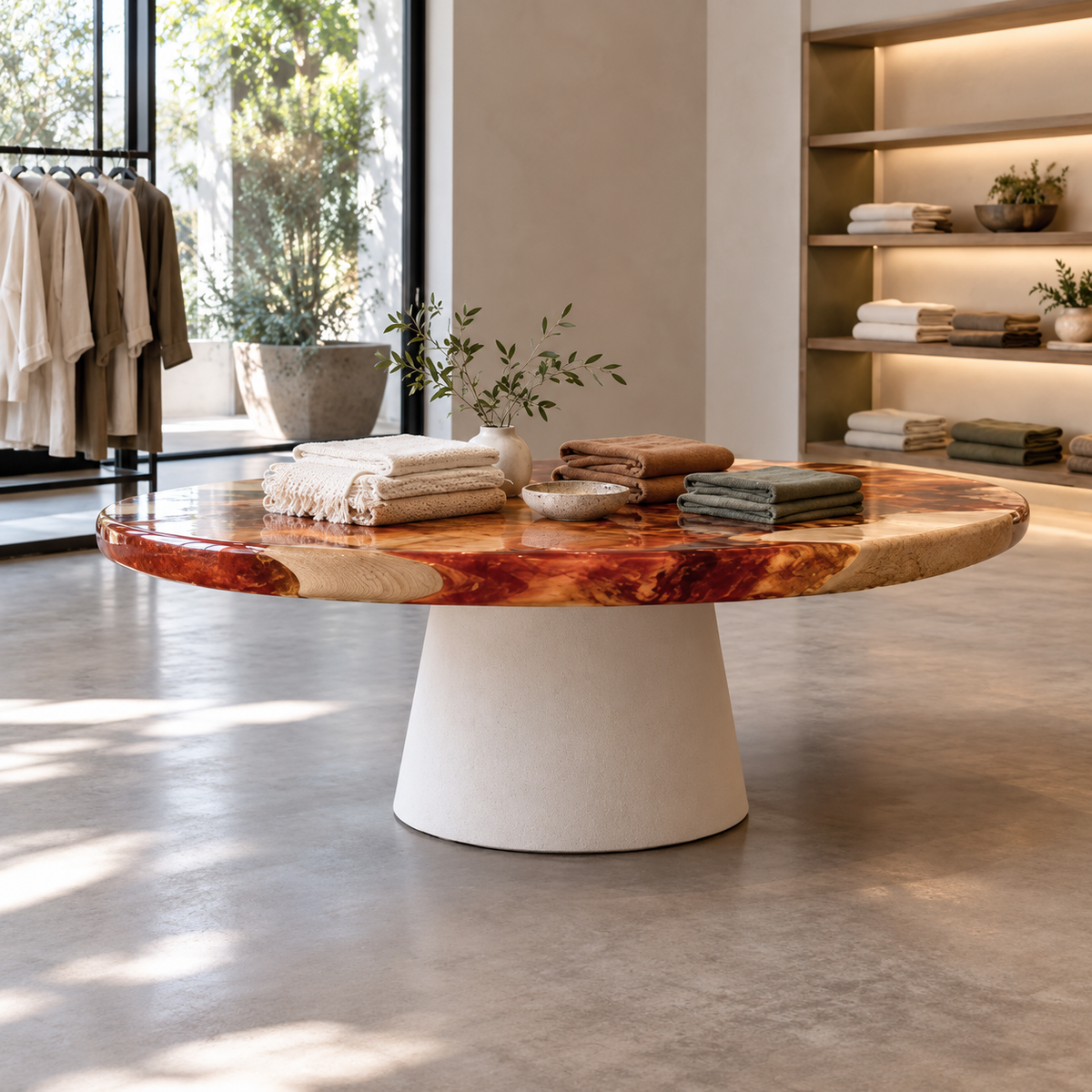
A distinctive display table can give a boutique a memorable center. It can also compete with the merchandise if its grain, resin, and accessories become too busy. The useful design question is not simply whether the table looks striking. It is whether shoppers can understand and approach the display easily.
Imagine a small shop preparing a central display for folded textiles and accessories. This is a planning example, not a report of an actual WOODZIO project. Its purpose is to show what to test before choosing a table.
Put the real products on the design board
Gather a representative group of merchandise: pale items, dark items, packaging, and the pieces with the strongest pattern. Compare them with the proposed tabletop appearance. A surface that frames one product beautifully may make another difficult to distinguish.
If the merchandise changes frequently, prioritize a table composition that works with several collections. Trays or simple display risers can provide a visual pause between a busy product and a figured tabletop. Test them rather than adding accessories only to fill empty space. For a circular display concept, review a black walnut resin round table alongside the actual merchandise and confirm its suitability for the intended display loads.
Choose height through the shopper experience
Think about whether customers need to read labels, handle merchandise, or view an object from above. A dining-height table may be convenient for some products and less useful for others. Describe those actions in the brief instead of requesting a height because it looks attractive in an inspiration image.

Consider staff as well. Restocking and arranging the center of a deep table can be different from working along its edge. Use a temporary surface to test the intended display depth and the reach needed for routine tasks.
Keep the route clear
Place a full-size outline in the proposed shop location. If you are comparing round wood and epoxy tables, include the merchandise footprint as well as the circular tabletop. Walk around it with neighboring displays in place. Include the point where a customer pauses to examine a product, since that person becomes part of the circulation pattern.
Have applicable accessibility and egress requirements reviewed by the appropriate professional. A visually open plan is not a substitute for checking the actual requirements of the space.
Confirm loads and surface care
List the display equipment and anticipated merchandise weight. Ask the maker to confirm the suitable loading and placement for the proposed table. Avoid treating a decorative tabletop as permission to install heavy fixtures or attach hardware wherever convenient.

Request care instructions for the actual finish and discuss any risks from adhesives, display feet, or repeated movement of merchandise. Protective materials should be selected for compatibility rather than assumed harmless.
Review the whole display under shop lighting
Photograph a trial arrangement from the entrance and at browsing distance. Check whether labels remain readable and whether the tabletop helps distinguish the products. Remove one display accessory and see if the arrangement becomes clearer.
For a retail furniture inquiry, share merchandise photos, a floor plan, the intended display loads, and the tasks the table needs to support. Confirm the proposed construction, finish, and care requirements for the actual order before approving the design.


