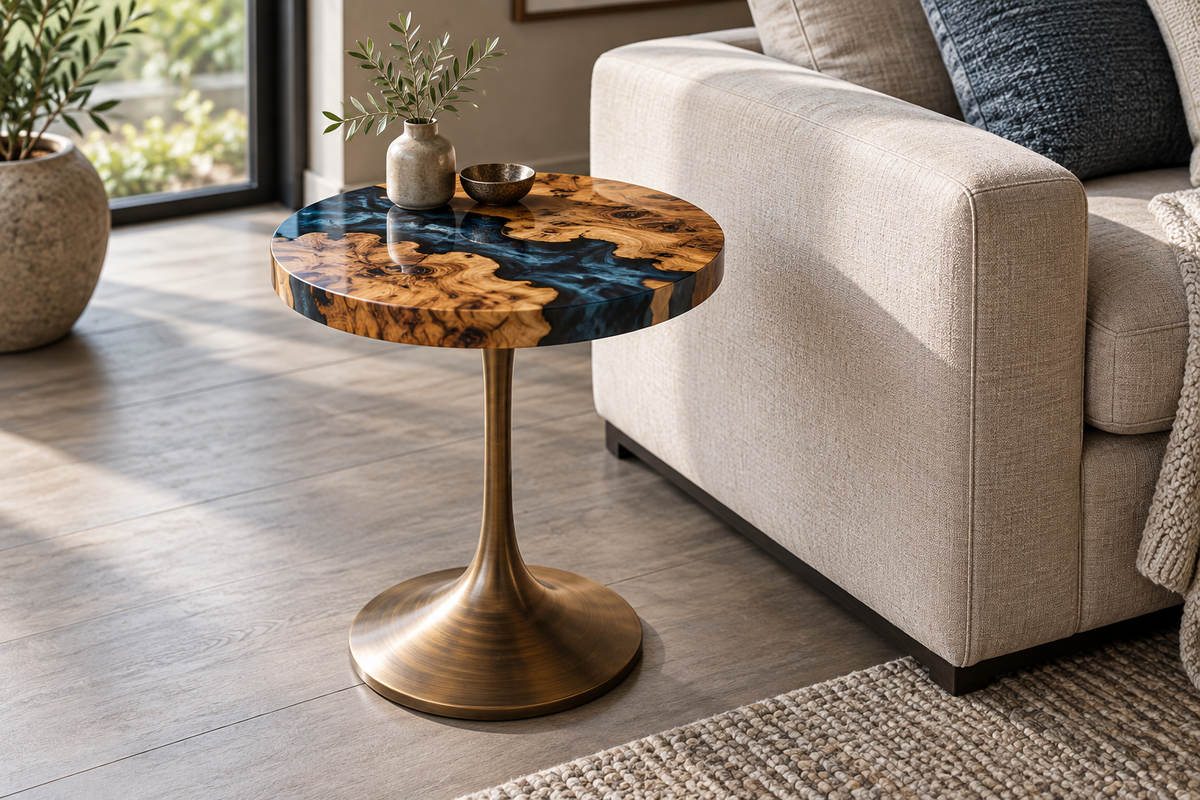
A living room does not automatically need one large table in the middle. Depending on the sofa, circulation, and daily habits, side tables may be more useful, a coffee table may provide the right shared surface, or a combination may work best. Choosing epoxy side tables adds another consideration: where you want its wood-and-resin detail to appear in the room.
Compare three arrangements before choosing a piece. Use the surfaces you actually need for drinks, books, lamps, or a tray rather than starting with a styled photograph.
Arrangement one: a central coffee table
A coffee table creates a shared surface and a clear center to the seating group. It can also provide a broad view of the tabletop from the sofa. If the epoxy composition is intended as a focal point, that visibility may be part of its appeal.
Test whether people can reach the surface comfortably and pass between it and the seats. Include the route used when someone stands up with a cup in hand. A larger top is not helpful if it makes the most common movement awkward. A olive-wood live-edge resin coffee table is one central-surface option to compare with side tables; mark its selected footprint before deciding which arrangement leaves the more useful route.
Arrangement two: side tables at the seats
Side tables place smaller surfaces next to individual positions. This may leave the center more open, particularly when the room is also a passage between other spaces. Check which seats have a convenient surface rather than assuming both sofa ends serve everyone equally.

If a lamp is part of the plan, include its footprint and cable route. A narrow side table may look suitable until the lamp leaves little room for anything else. Match the proposed height and position to the actual sofa arm and seated reach.
Arrangement three: a restrained combination
A smaller coffee table with one useful side table can divide the tasks. The central surface holds shared items; the side table carries a lamp or provides a place for the seat farthest from the center.
Keep the visual hierarchy clear. You might choose one strongly figured epoxy piece and make the other quieter, or connect the two through a resin tone while varying their shapes. Identical-looking pieces are not required, but the relationship should be intentional.
Check the room in motion
Mark each candidate outline on the floor and walk through the seating area. Include any accent chairs that share the table surfaces, rather than testing the sofa alone. Open nearby cabinet doors and test any reclining seat according to its furniture instructions. Include the extra route needed during gatherings when people sit in different positions.

Consider how the room will be cleaned and whether a table is expected to move. Ask for handling guidance and the relevant weight before treating a solid-looking piece as portable.
Choose the task before the shape
Write one sentence for each surface: “a place for the lamp,” “a shared tray during conversation,” or “a cup beside the reading chair.” Remove any table that has no useful role in the plan.
Share the sofa and chair dimensions, tested layout, and the task assigned to each surface with WOODZIO. Confirm the proposed height, base footprint, and handling requirements for the pieces you select. The best arrangement gives each table a purpose and leaves room to enjoy the seating.


