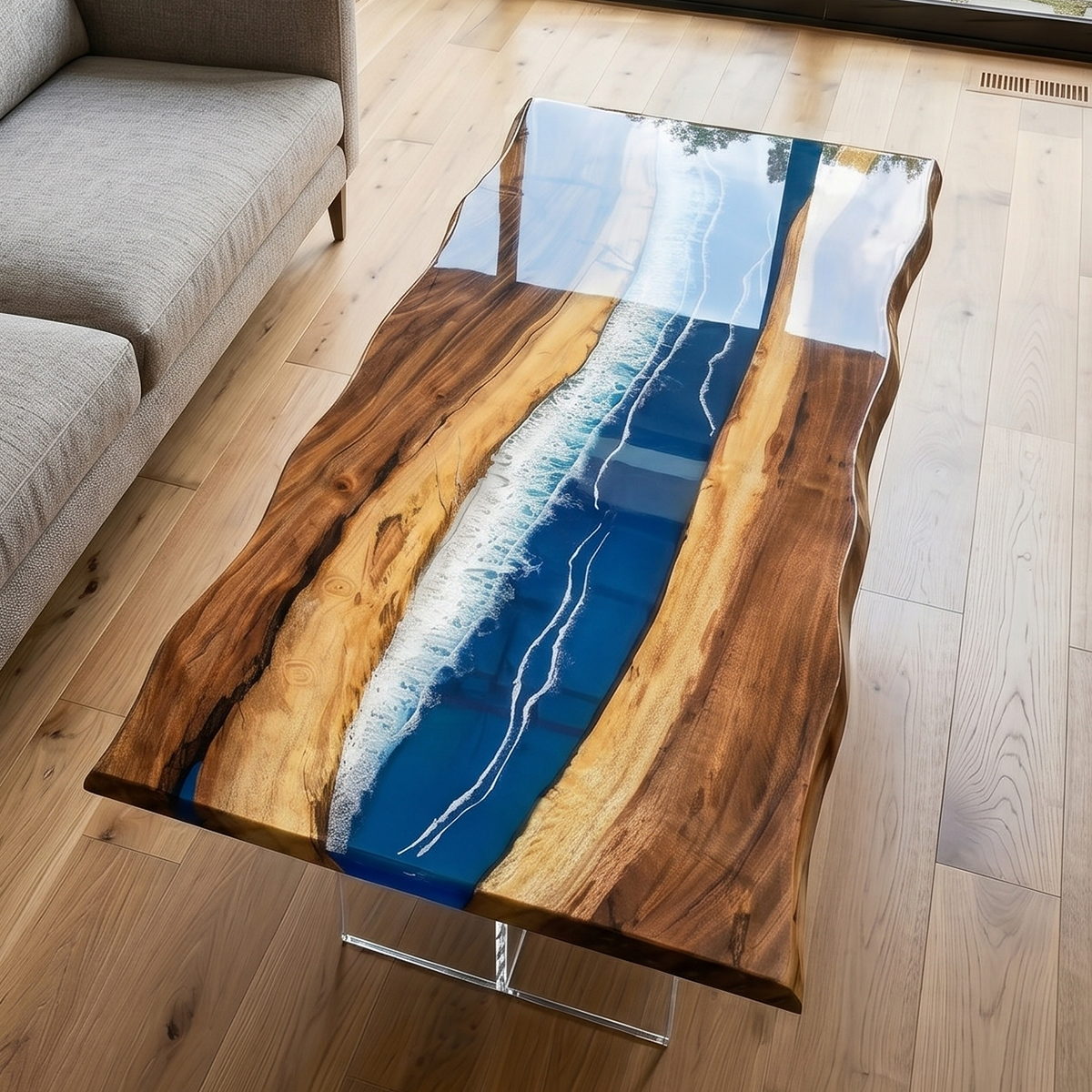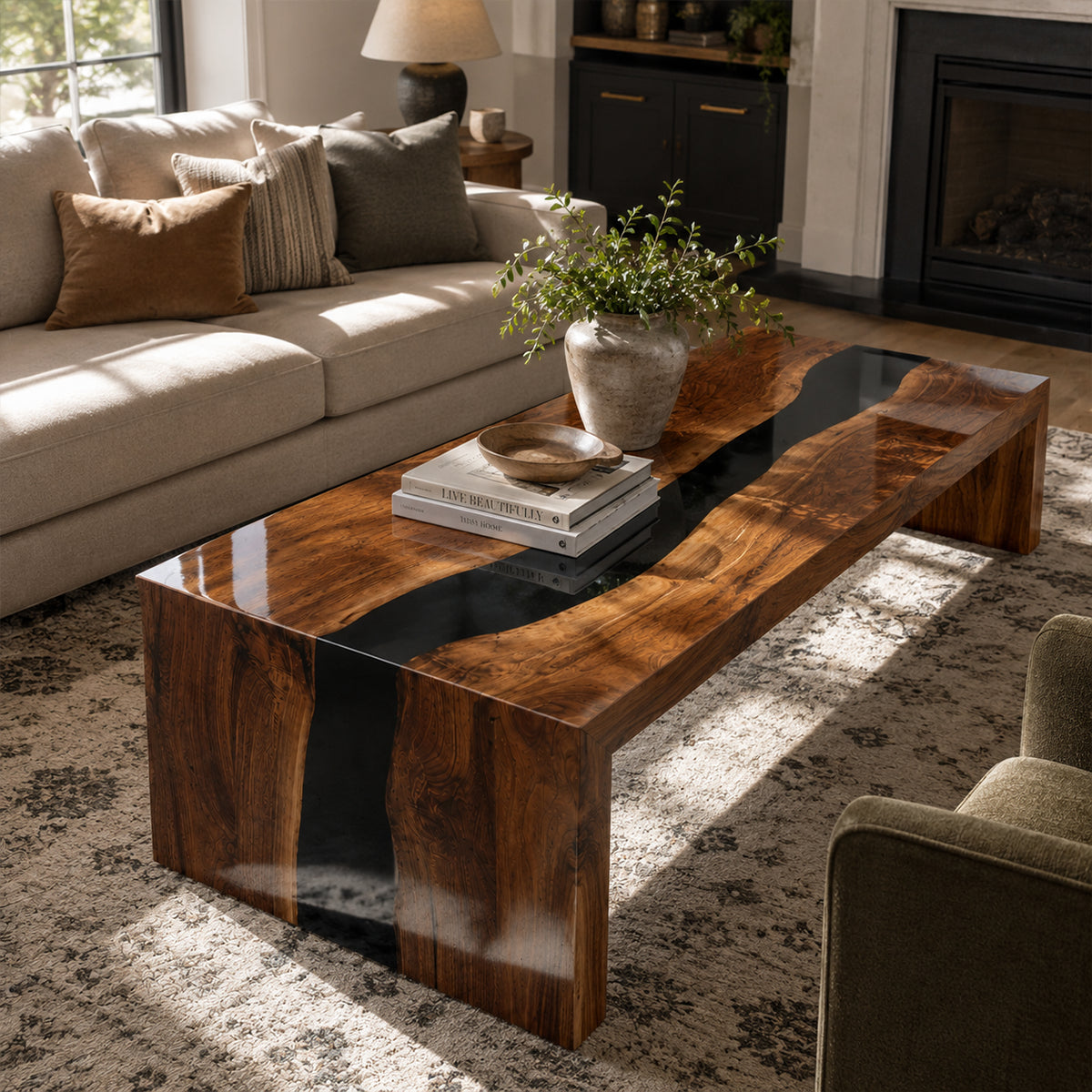
A coffee table is viewed at close range and used from a sofa, so its relationship with that seat matters as much as the tabletop pattern. Before selecting a design from the custom wood and epoxy resin coffee tables, test where you want the surface to sit and what you need it to hold.
Start with the sofa you will use
Record the sofa's width, seat height, and depth. Note any chaise section, reclining movement, or additional armchair that affects the available space. A photograph taken from the corner of a room can hide these practical relationships.
Place a temporary object or marked outline where you imagine the coffee table. Sit on the sofa and try reaching toward the proposed edge. Check how you stand up, walk past, and sit down again. Use those movements to identify the position that feels appropriate for your seating.
Compare the full shape and footprint
Look at the base as well as the top. Supports, projecting legs, and solid vertical ends can change how a table occupies the space. Review the complete dimensions rather than relying on the apparent lightness of an image.
The walnut and black river waterfall coffee table offers a reference for a top that continues into a vertical end. That visual form can help explain a design preference, while the fit still needs to be checked against your sofa and walking routes.
Plan for everyday objects
List what normally sits on your coffee table: drinks, a remote, reading materials, or a small tray. Decide how much clear surface you want to retain when those items are present. A beautifully styled image may contain far fewer objects than your room uses each day.
Keep any preferred tray or centerpiece on the layout reference. Consider whether it leaves enough of the wood and resin pattern visible and whether it is easy to move when the surface is needed.
Review the view from the sofa
A tabletop judged from above may look different when viewed from the sofa. Compare the resin river, edge, and base from the seated angle. Include the rug, sofa fabric, and neighboring furniture in the same material board.
Our guide to styling a resin coffee table with living room materials helps connect those choices without covering the surface with unrelated accents.
Test the arrangement before finalizing
Use floor tape to mark the proposed outline and keep it in place through normal routines. Check the route around a chaise, access to an armchair, and any movement of nearby furniture. The useful size is the one that works with your room rather than a fixed proportion taken from an unrelated setting.
Share the sofa dimensions, layout photos, and preferred design through the custom table inquiry. Confirm the available top and base configuration before ordering.