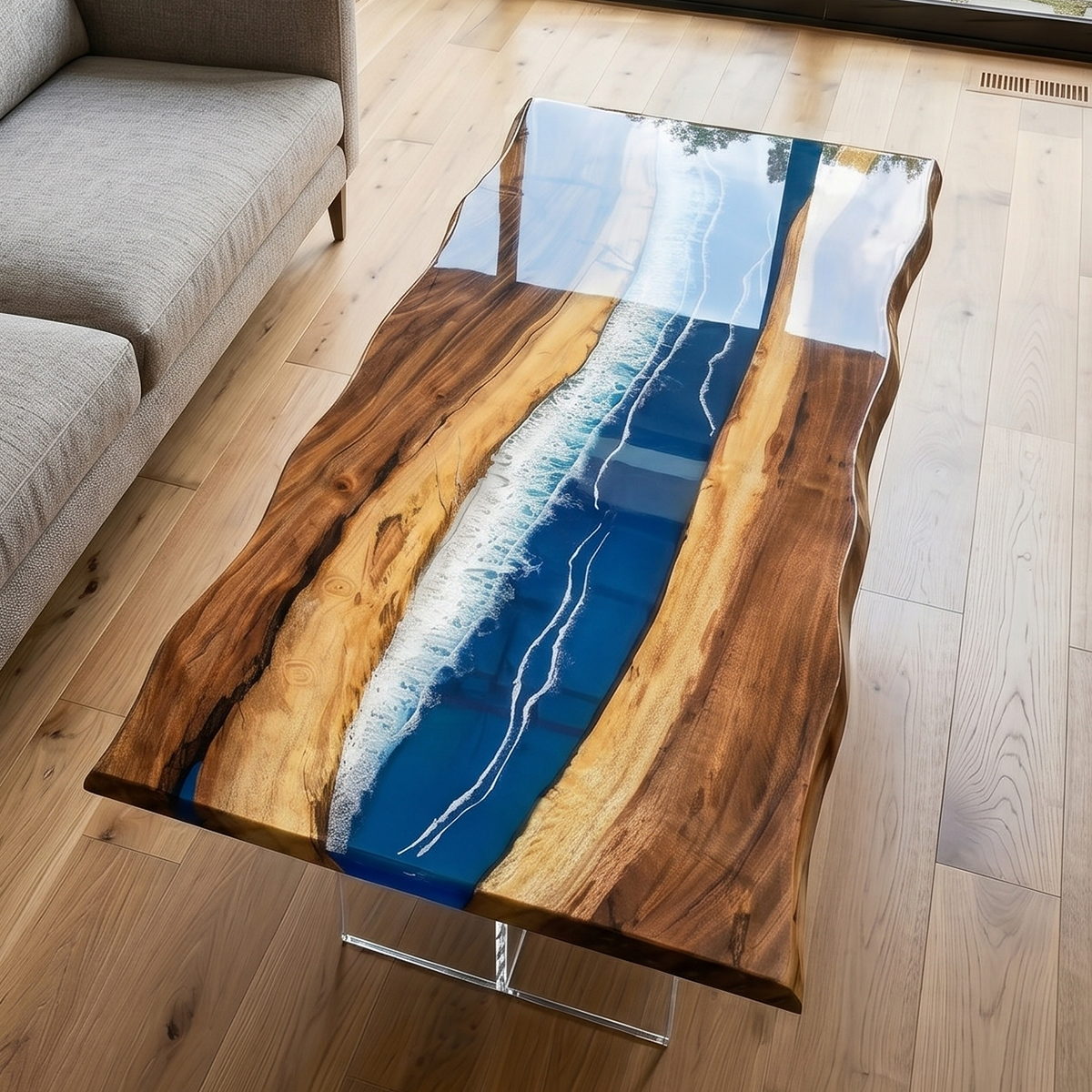
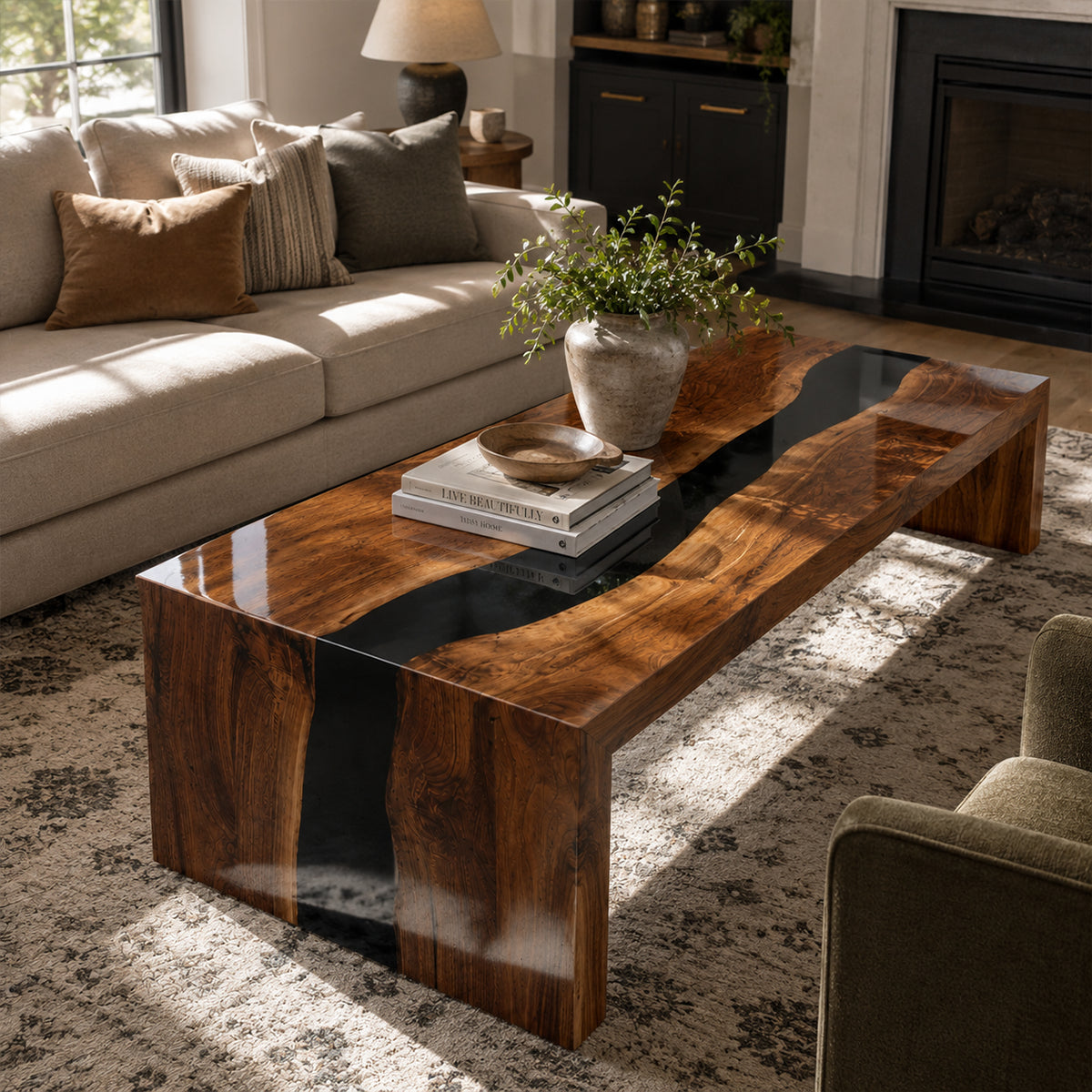
A wood and resin coffee table brings a pattern into the center of a seating area. Styling it works best when you consider the rug, sofa fabric, and everyday objects together. Begin with references from the wood and epoxy coffee table collection, then compare them with the materials in your living room.
Choose one leading pattern
If the tabletop has expressive grain or a prominent resin river, consider whether the rug and cushions should be quieter. If you already own a strongly patterned rug, compare a more restrained tabletop direction alongside it. Neither approach is a rule; the material board helps you decide which composition you prefer.
The burl wood and black river coffee table is a reference for a patterned wood surface with a dark resin channel. Use the visible relationship between the materials to describe your preferences, rather than expecting another piece to repeat the exact grain.
Compare color in the actual room
Put the sofa fabric, rug reference, wall color, and tabletop reference together. Review the palette in daylight and under the lighting normally used in the evening. An available sample is helpful when a specific color relationship matters.
Try repeating one modest detail, such as a dark base color or a resin accent, elsewhere in the room. A small connection can be enough; matching every accessory may make the arrangement feel more rigid than you intended.
Leave part of the surface open
Plan a clear area for drinks and the objects used most often. Then consider a small tray, a few books, or a single decorative item for the rest of the surface. The arrangement should be easy to move and should leave the wood-and-resin composition readable.
Check how the arrangement looks from the sofa. A tall centerpiece that works in an overhead image may interrupt the view across the room. Include everyday items in the test instead of evaluating only a decorative arrangement.
Consider the base and rug together
A solid vertical end and a visually open base frame the rug differently. Look at how much of the rug remains visible and how the base relates to other furniture legs. Also check the actual base footprint; a light-looking image does not establish how much floor space the piece occupies.
Keep the proposed top height alongside the sofa measurements. Styling decisions are easier to evaluate when the practical seated relationship is already clear.
Keep the layout part of the decision
Our coffee table layout testing guide explains how to check the shape with a full-size outline. Use that test before deciding that a table suits the room based only on color.
If you have a specific resin, wood, or base preference, ask Woodzio about the available coffee table options. Share the room palette and layout details together so that the design discussion covers appearance and everyday use.