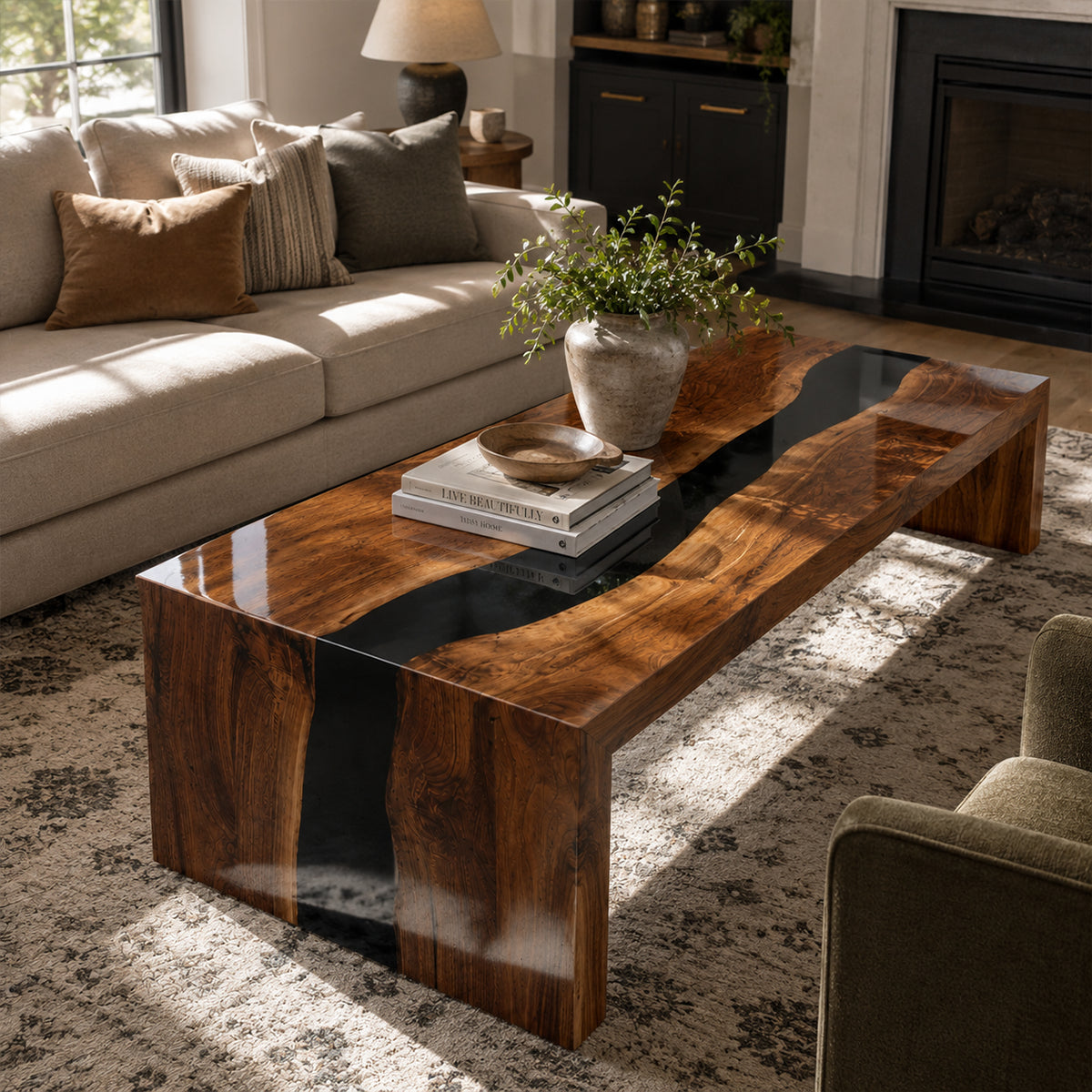
A living room plan often looks spacious until the seating is occupied. A coffee table needs to work in that everyday arrangement, especially beside a sectional sofa or several chairs. Before choosing from the custom epoxy resin coffee tables, try a full-size outline where you intend to place the piece.
Mark the furniture that stays
Start with the sofa, chairs, media unit, doors, and any ottoman. Include the position of a chaise or reclining section. Measure the remaining space and mark the proposed coffee table outline with removable floor tape.
Keep the outline based on a specific proposed top shape. If a base or vertical end occupies space beyond the top's apparent edge, add that footprint too. Record measurements clearly so the test can inform your inquiry.
Try the room with people seated
Sit in the positions used most often and check the reach toward the table. Have another person walk through the normal route while the seats are occupied. Test entering and leaving the sofa without moving the temporary outline out of the way.
If the room includes an armchair, check its relationship with the table as well as the sofa's. A layout that works from one seat may feel awkward from another. Our coffee table and sofa planning guide explains what to record from those seated tests.
Test the surface for the actual routine
Use a paper layout or existing surface to arrange the objects you expect to keep on the coffee table. Include drinks, a tray, books, and any other items used regularly. Think about what needs to be cleared when the table is used differently.
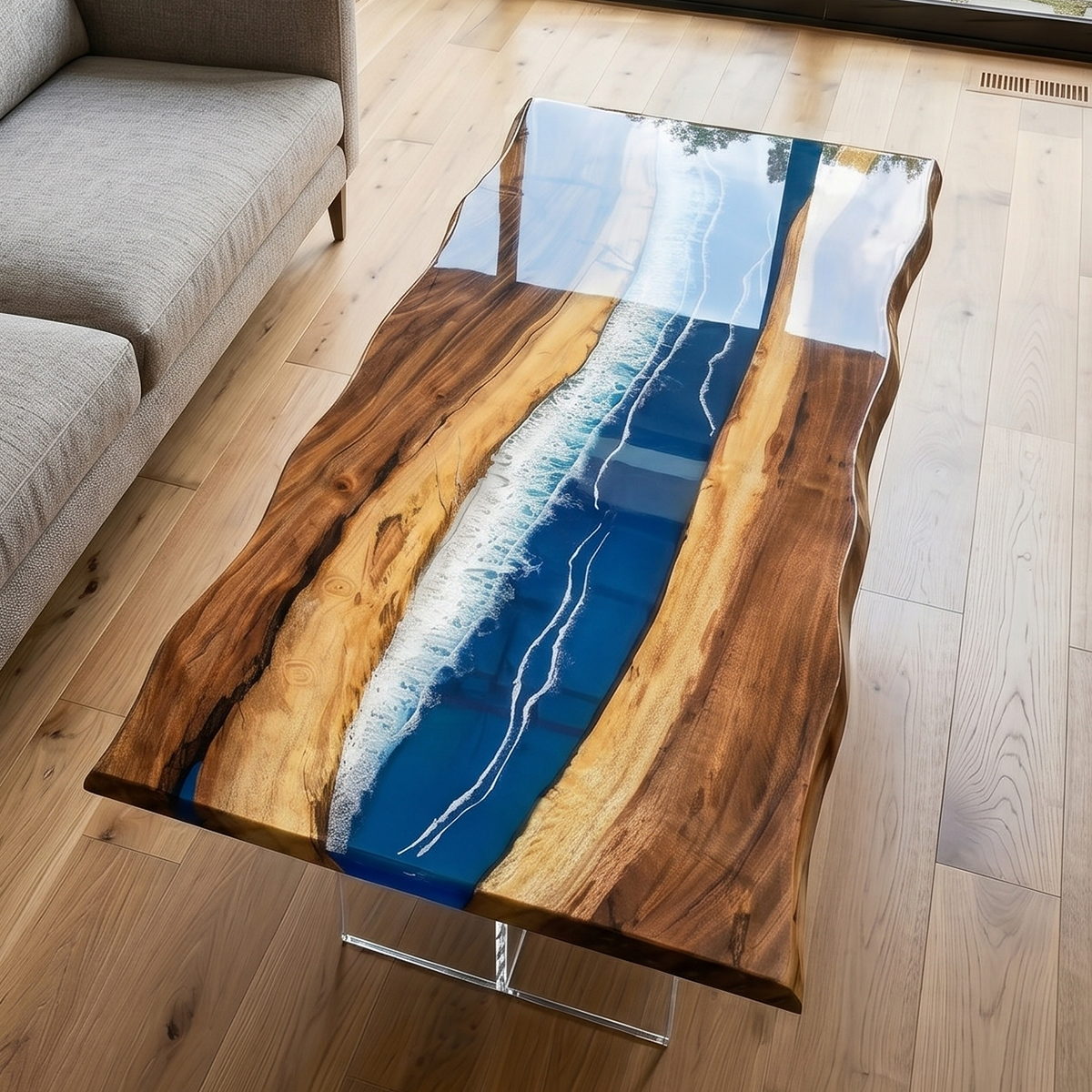
The walnut ocean wave resin coffee table offers a reference for a rectangular wood-and-blue-resin composition. Its listing helps communicate a visual direction; it does not determine the dimensions or base that will work in your room.
Compare shape changes one at a time
If the first outline does not work, change one feature and repeat the test. You might adjust the position, length, width, or proposed form. Changing everything at once makes it harder to identify what improved the layout.
Photograph the outline from the doorway and from the sofa. Keep notes about the troublesome route or seat, rather than relying on a general impression that the room feels crowded. Those specific observations make the next design discussion more useful.
Prepare the inquiry from the test
Bring together the sofa and chair measurements, tested outline, access notes, and material references. Ask which dimensions, edge details, and base options are available for the proposed coffee table.
Share these notes through the custom table inquiry page. Review the agreed configuration and care guidance for the actual piece before ordering. The room test gives you a practical reason for the chosen shape, alongside the resin design that first caught your eye.