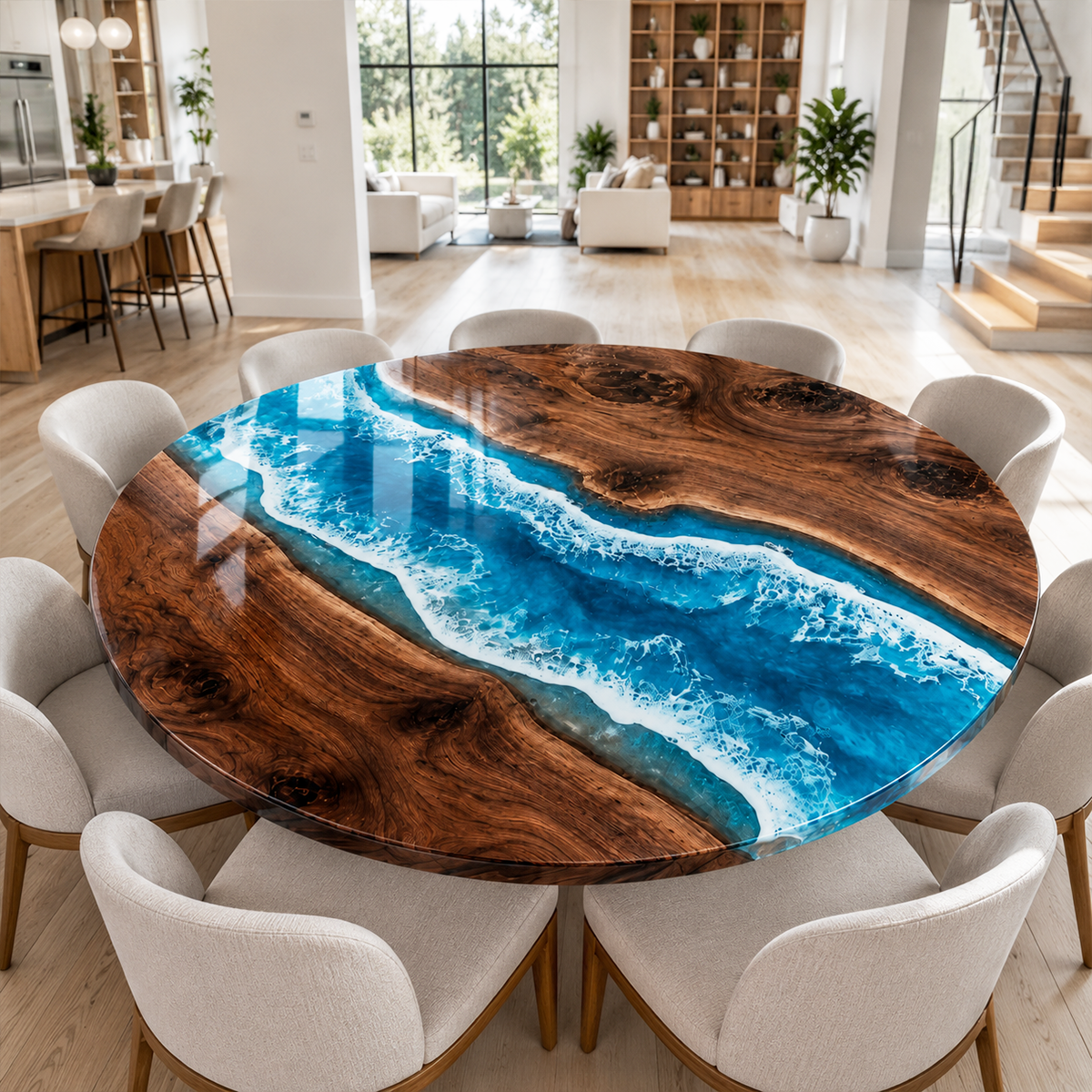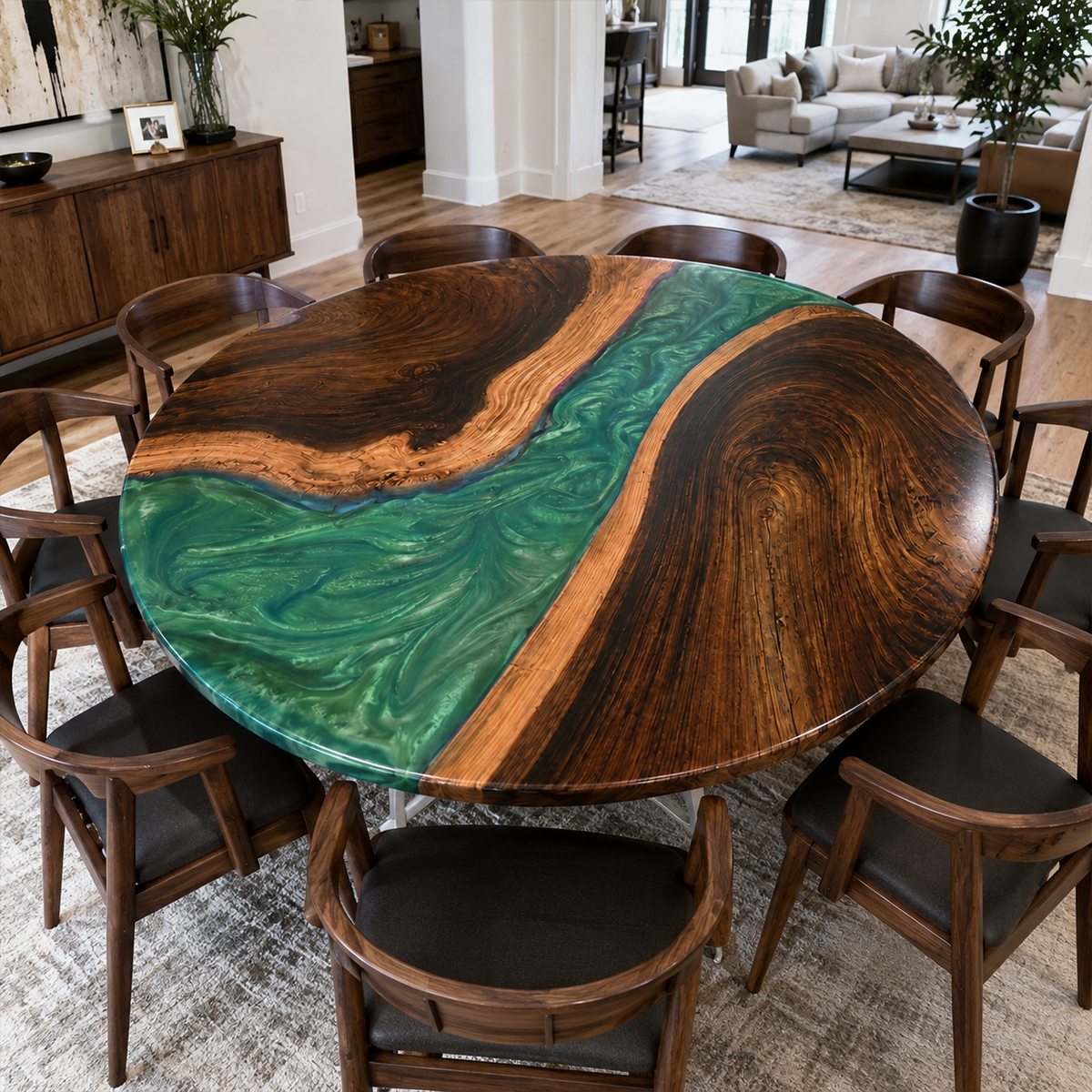
A round tabletop has no corners, but it still needs space for chairs and movement. Its suitability for a room depends on the complete arrangement, including the base and nearby furniture. Before choosing from the custom round wood and epoxy resin tables, test how a circular footprint works in your actual space.
Draw the circle in the room
Record the room dimensions and mark fixed obstacles, door swings, storage, and furniture that will stay. Then draw the proposed tabletop as a circle on the plan. Use measurements rather than estimating the diameter from an interior image.
For a practical test, mark a full-size outline on the floor with removable tape. A paper or cardboard pattern can also help show the edge. Keep the outline in place while you try the normal routes through the room.
Add chairs and their movement
Place your intended chairs around the outline and ask someone to sit down, move back, and stand. Test the arrangement with several chairs occupied. Consider the route to storage and any doorway that opens toward the table.
A round shape does not establish a seat count by itself. Chair width, the proposed diameter, and the base arrangement all need to be reviewed. If seating is a deciding factor, make it a specific question in your inquiry.
Check the base from seated positions
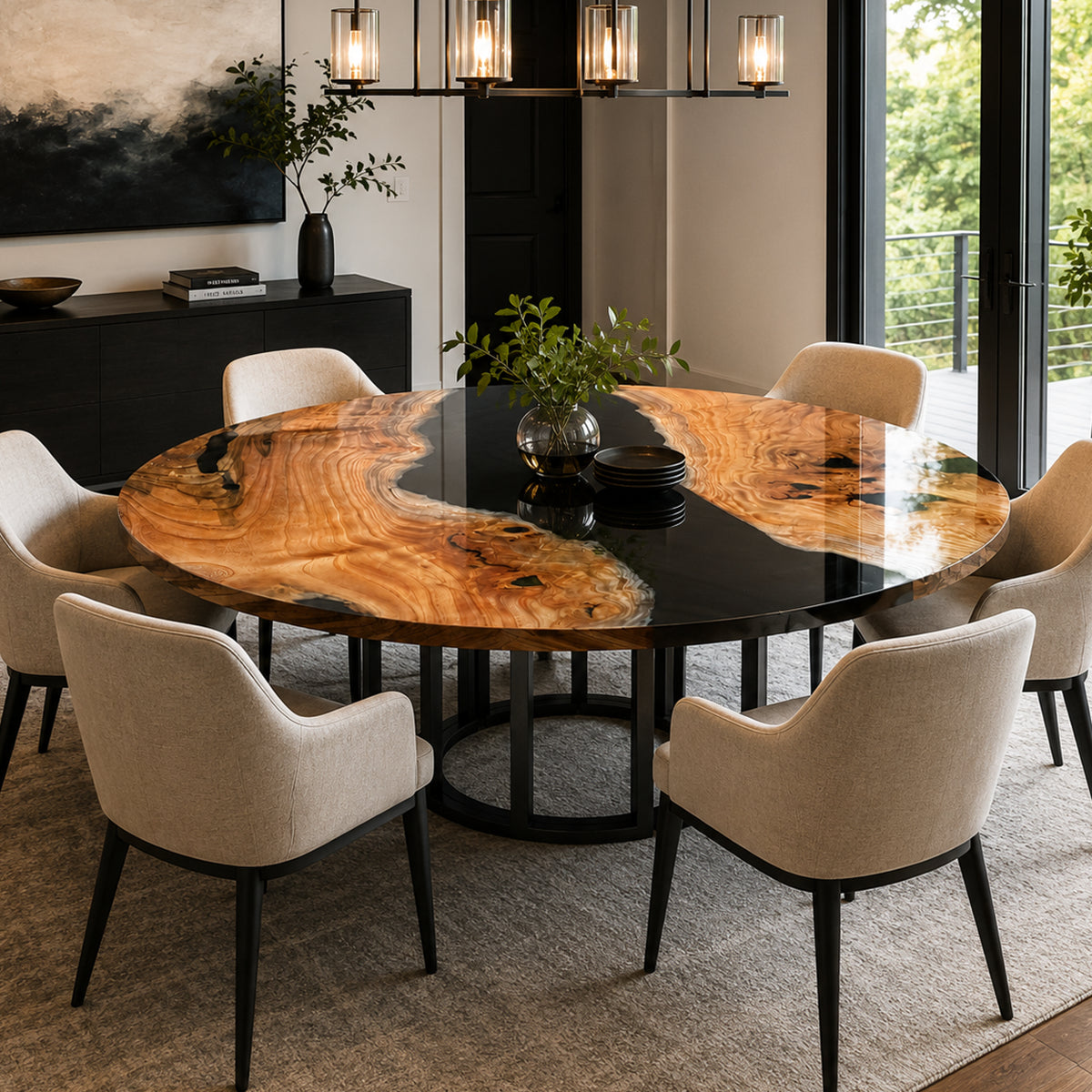
Look at where supports fall in relation to feet and chair legs. A centered support and a base with several outward legs create different conditions beneath the same circular top. Check the actual proposed configuration rather than assuming one base can be substituted without changing the layout.
The walnut wood resin river round table offers a visual reference for a circular top with a dark river composition. Use the image to discuss appearance while confirming the dimensions and base of the piece you intend to order.
Think about the room beyond the table
Consider how the circle relates to the rug, lighting, and adjacent furniture. Try viewing the outline from the doorway as well as from a seat. A layout can look balanced from one angle while leaving an awkward route on the other side.
If the room serves more than one purpose, test those routines too. Clear a path for the activities you expect rather than relying on the shape alone to make a busy room work.
Carry the layout into the design
Once you have a practical arrangement, explore styling a round table's grain and resin pattern. Keep the material references beside the measured plan so that proportions and appearance are considered together.
Share your preferred diameter, chair details, and room notes through the custom table inquiry. Ask which round-table options can be provided, and review the agreed dimensions and supports before finalizing the order.