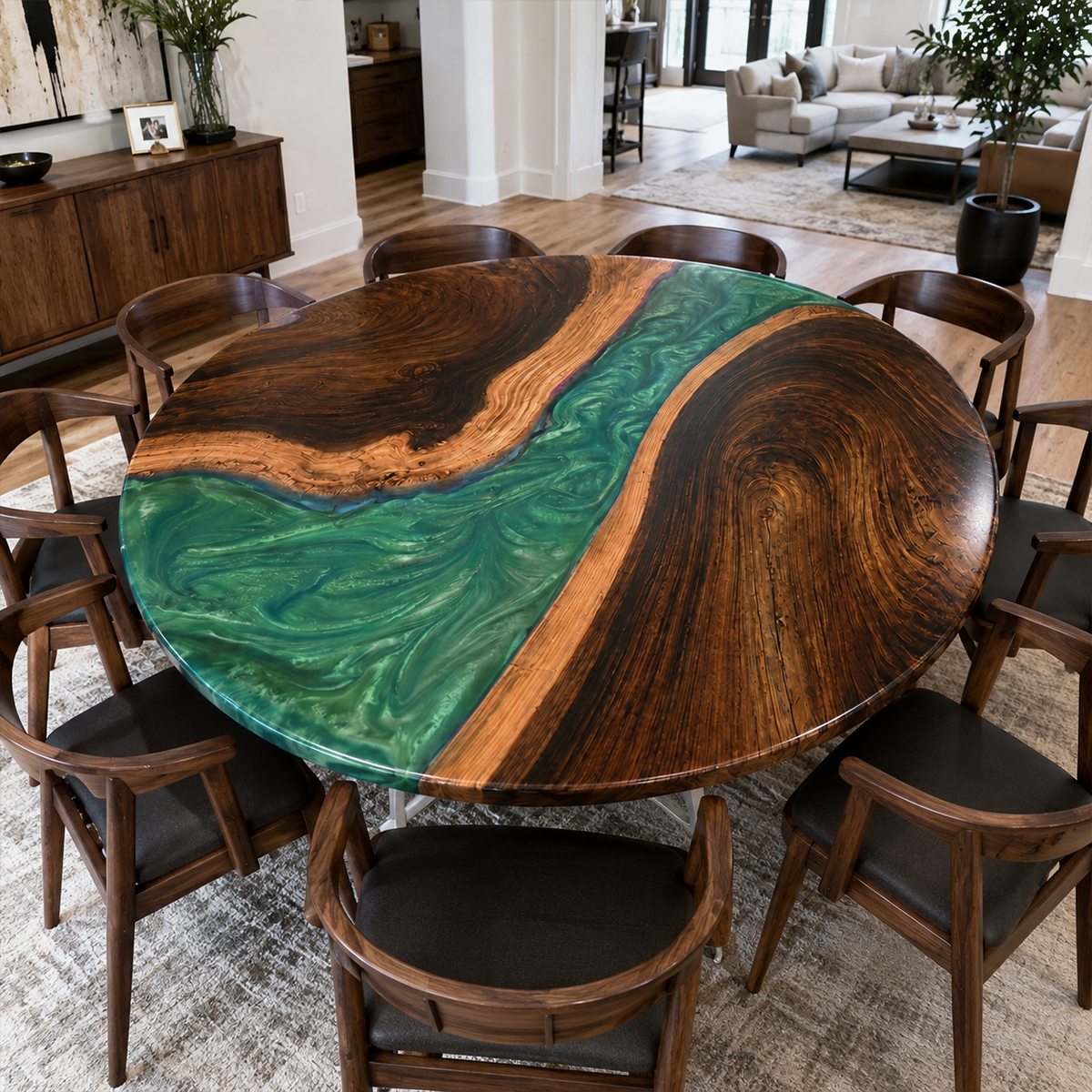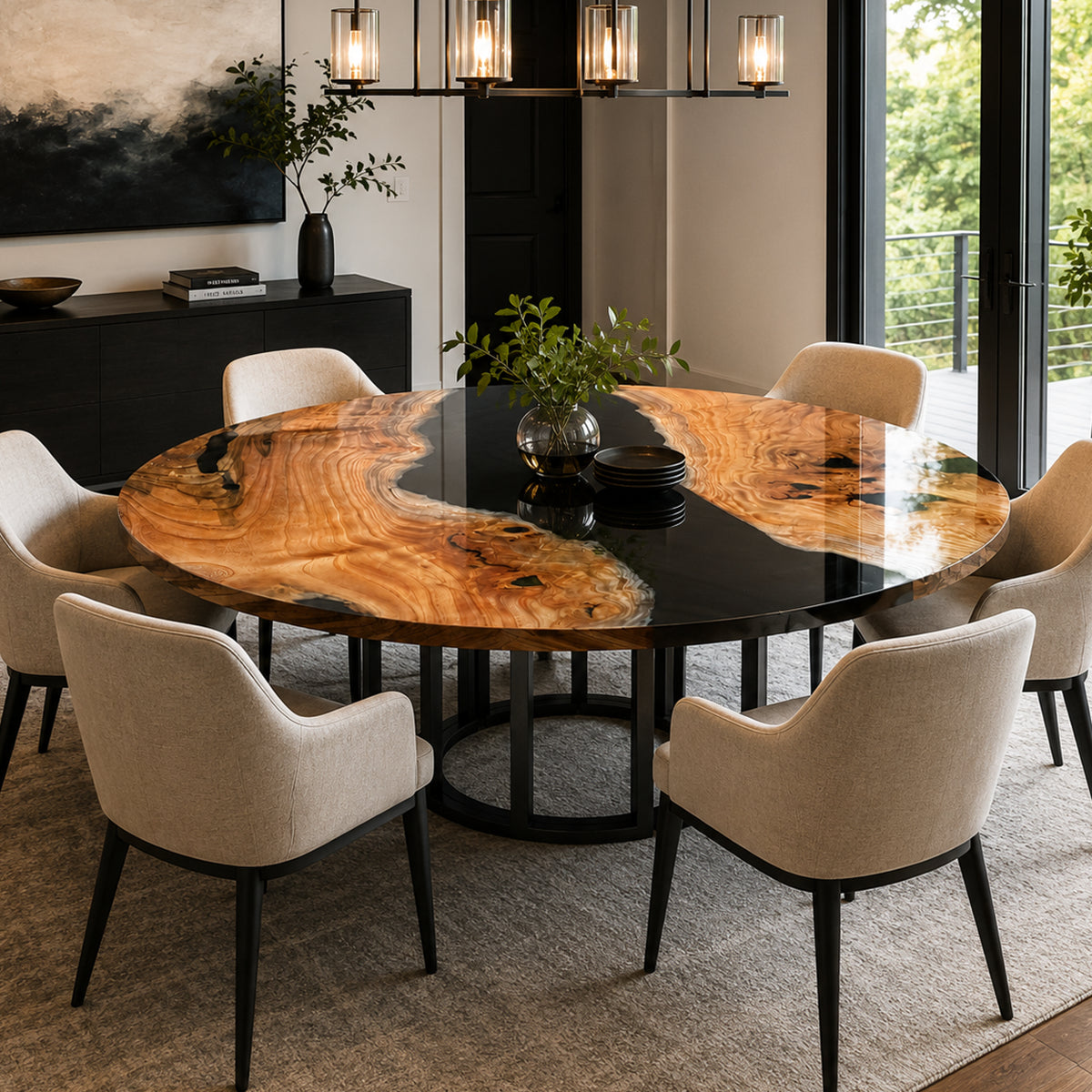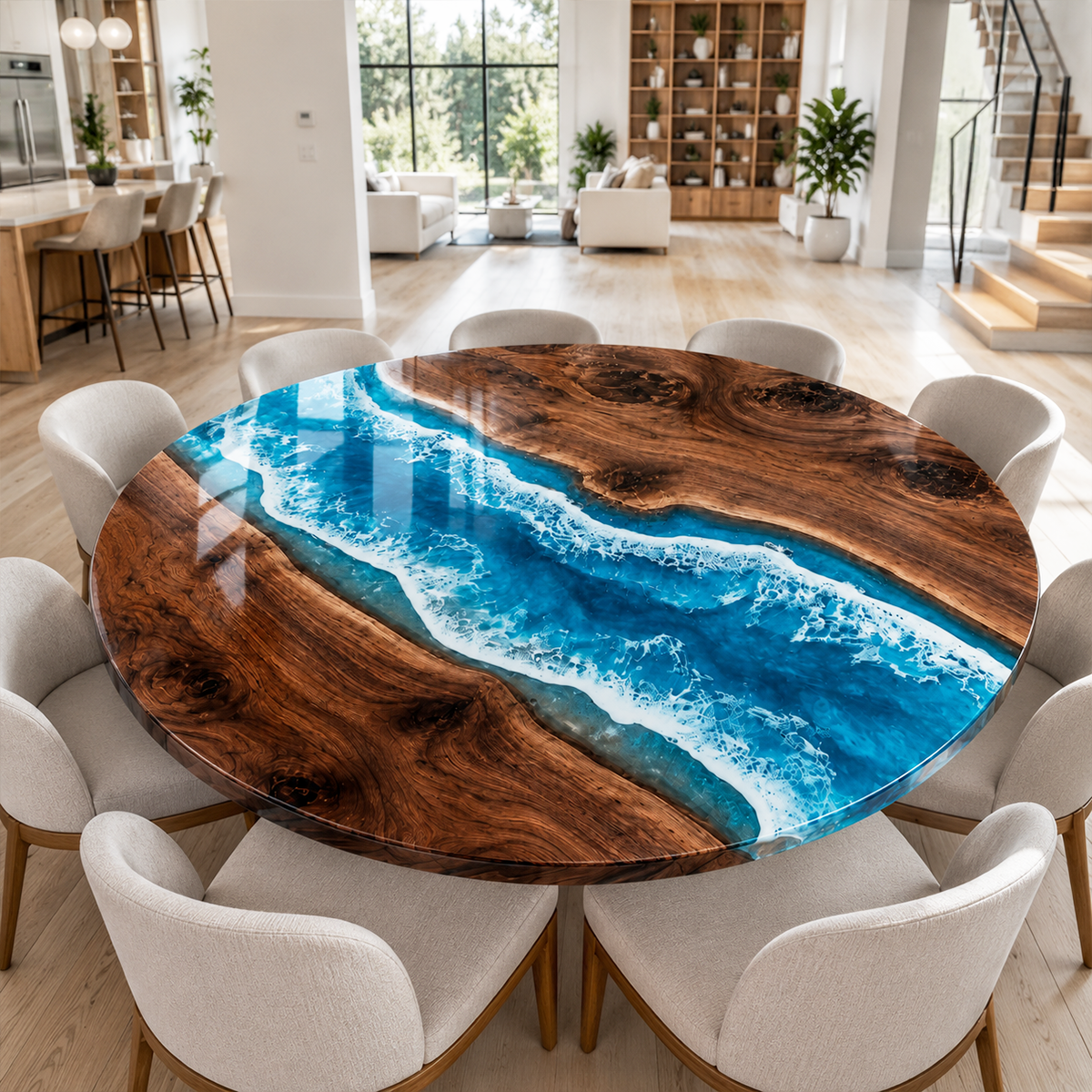
The diameter of a round table tells you the width of the top, but not how the complete piece will work with your chairs. Supports, underside clearance, and surrounding movement need to be checked at the same time. Approach the custom round wood and epoxy tables as a set of possible configurations rather than selecting the circle alone.
Begin with the seating you want
Write down the usual number of people and the activities planned for the table. Record the intended chair dimensions, including arms and the footprint of the legs. If you already own the chairs, use them in a room test.
Ask to review the proposed seating arrangement against the actual diameter. Different chairs can occupy different amounts of space, so an image showing several chairs is not a substitute for checking your own arrangement.
Test the diameter in the room
Mark a circular outline on the floor and place the chairs around it. Check movement when people sit, stand, and pass behind one another. Include nearby cupboards and doors in the test.
Our round table circulation guide explains how to map those routes. Adjust the proposed diameter only after considering what happens to the rest of the room, not simply because the top looks larger or smaller in a photograph.
Review the base and top together
Ask for the base footprint, position, and relevant underside dimensions. Compare them with the chairs and intended seats. A support near a person's feet may affect the practical arrangement even when there appears to be enough space at the tabletop edge.
The black walnut and blue wave resin round table is a design reference for a circular wood-and-blue-resin composition. It helps communicate an appearance preference; confirm the base and dimensions available for the configuration you want rather than assuming every pictured detail is transferable.
Consider what sits at the center
Try the usual serving dishes, place settings, or other items on an existing surface or a paper layout. Consider how each seated person will reach them. The useful arrangement depends on those objects as well as on the circumference.
If a light fixture or rug is part of the layout, check its position against the proposed circle. Review the complete composition from the entrance and from seated views to avoid choosing a diameter based on a single camera angle.
Make the inquiry specific
Bring the room plan, desired seating, chair measurements, material references, and proposed diameter together. Mark the base details that need confirmation and note any access constraints along the route into the room.
Use the custom table inquiry page to discuss the available options. Confirm the agreed top, base, dimensions, and use guidance for the actual piece before relying on a visual reference as the final design.