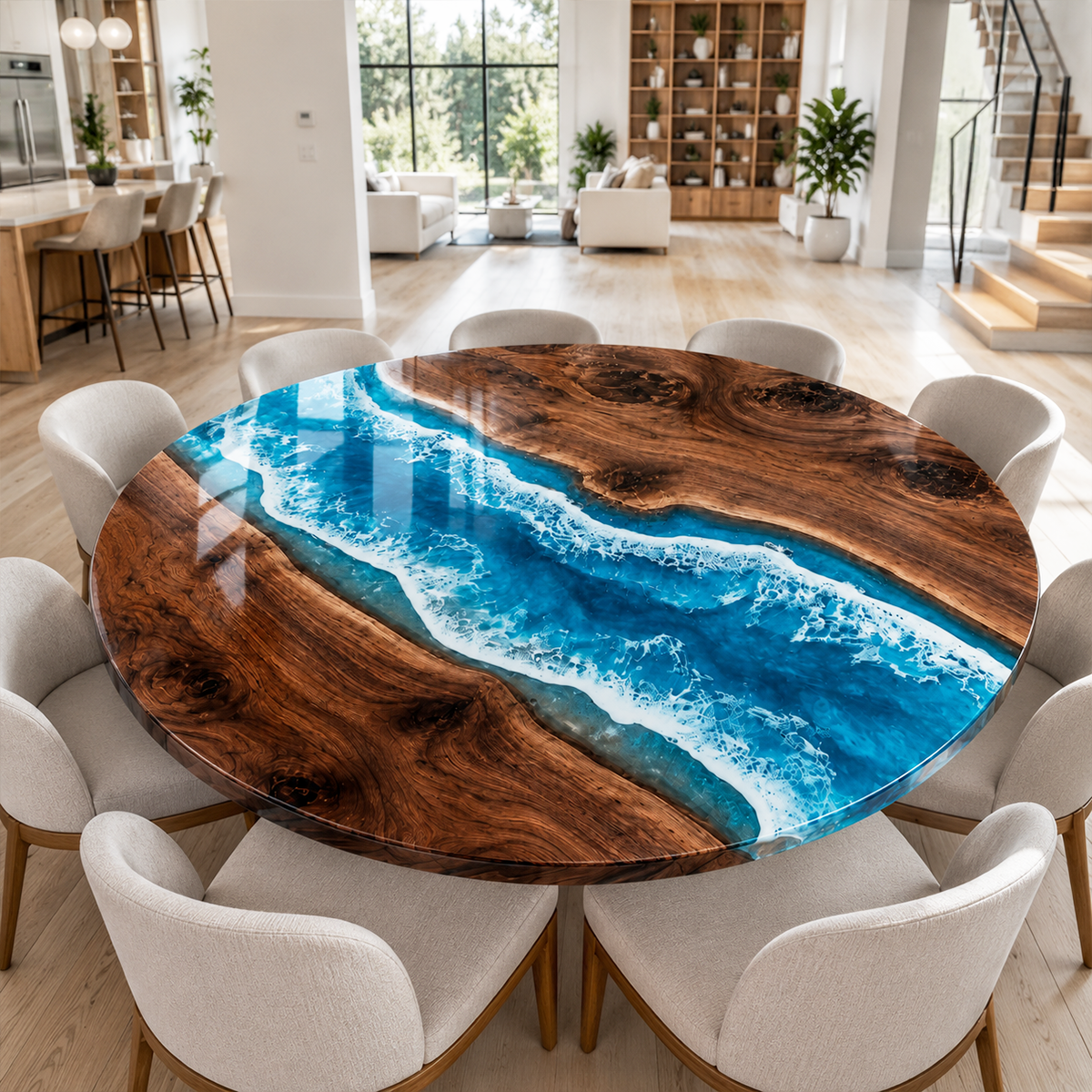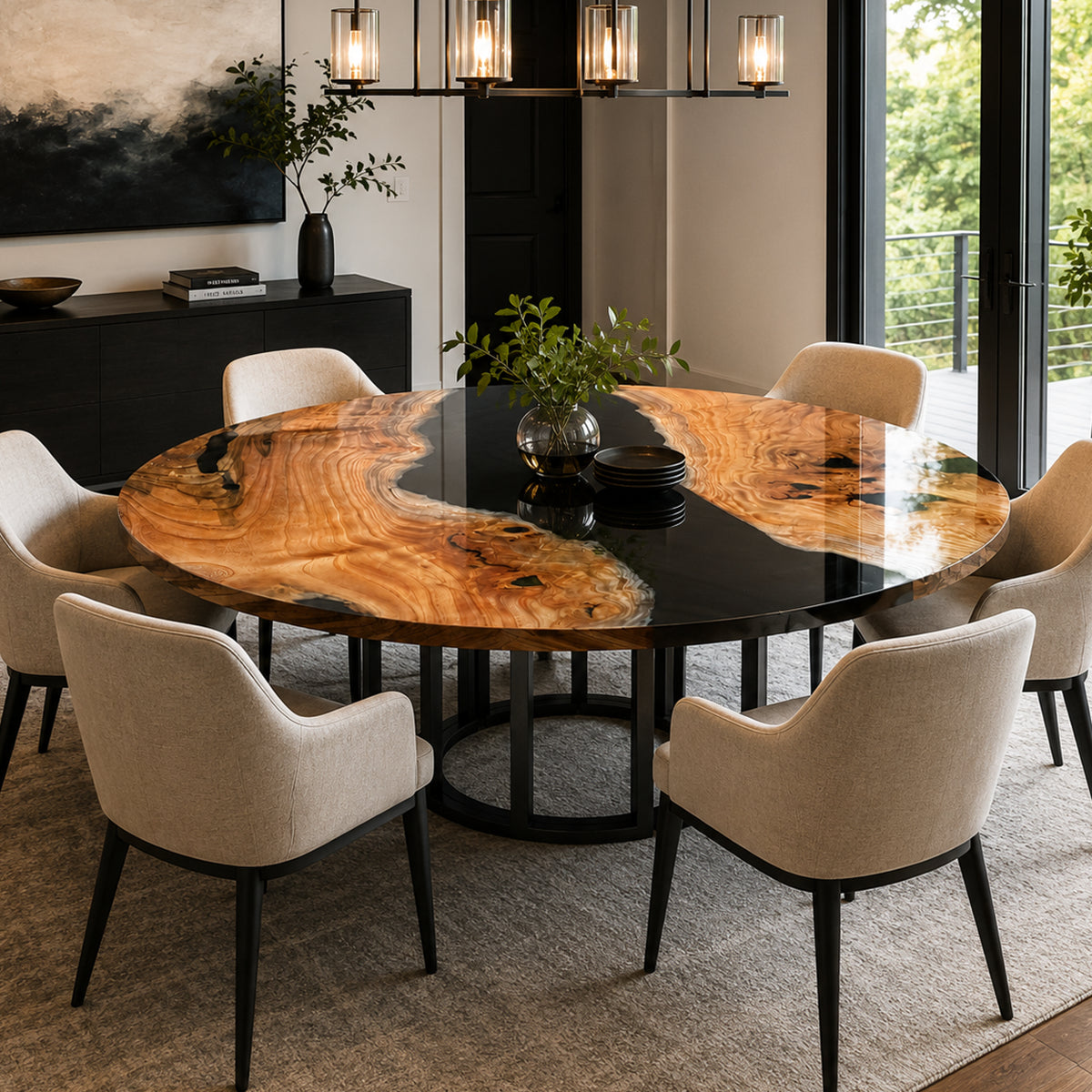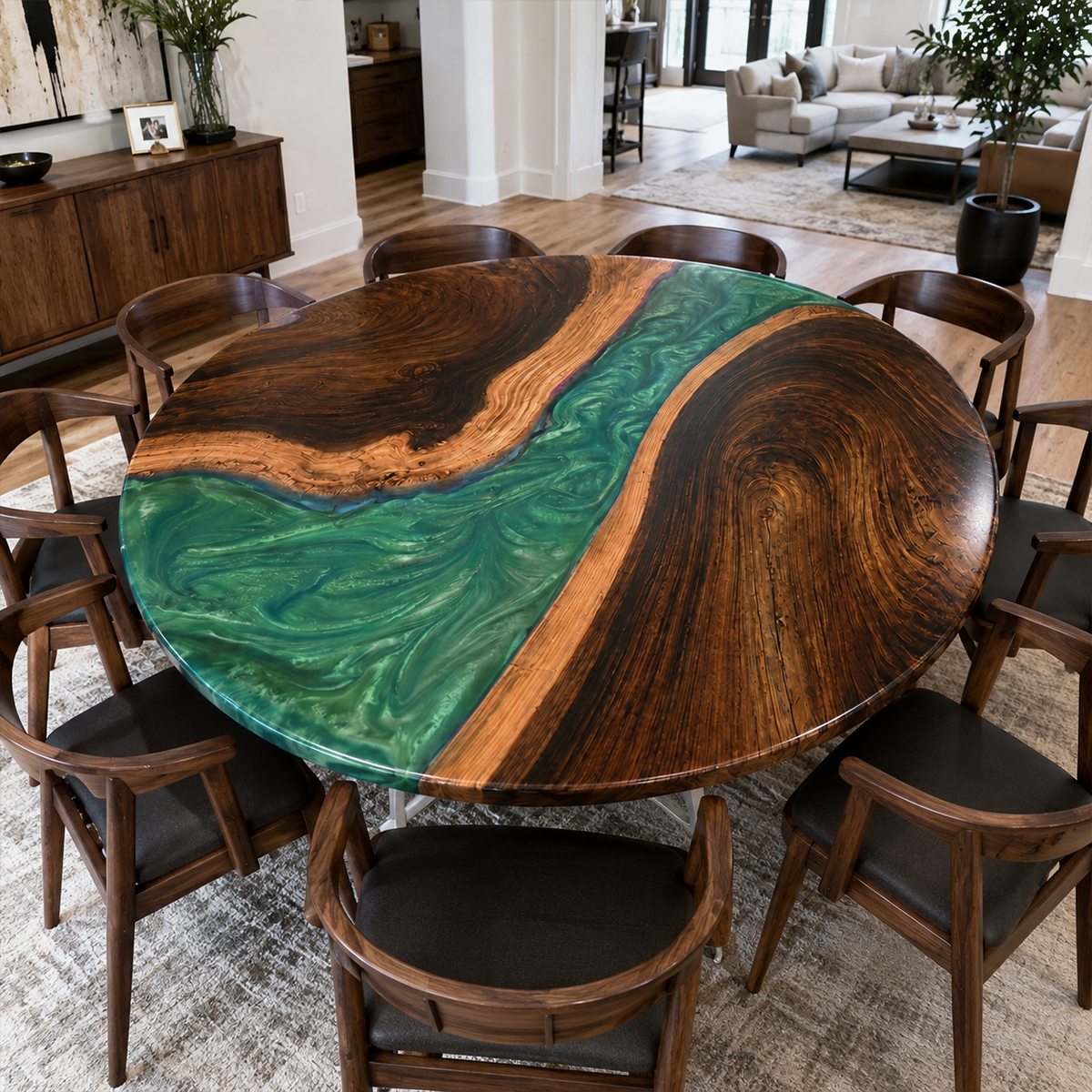
A circular table can be approached from several directions, so its resin pattern deserves a review from more than one viewpoint. A river that looks centered in an overhead image may feel more expressive from one seat than another. Start with the round wood and epoxy table collection and choose a composition that relates to the whole room.
Look at the pattern as a complete circle
Consider where wood, resin, and visible knots sit within the edge. Notice whether the river crosses the center, sweeps toward one side, or divides the circle into unequal areas. These differences can guide the visual direction without requiring a perfectly symmetrical design.
The black walnut and swirl green resin round table provides a reference for a flowing green accent alongside prominent wood grain. Use the composition to explain your preferences, while recognizing that another piece's grain and resin arrangement need to be confirmed separately.
Compare views from the room
Review the table reference from the entrance, main walking route, and seated positions. Think about which part of the surface will be most visible as people enter. If a light fixture is centered above the table, include it in the same visual review.
An available material sample can help you compare color under your lighting. A screen image helps establish a direction but should not be treated as an exact resin or wood color match.
Let chairs frame the surface
A row of broad chair backs creates a different view from a ring of open-frame chairs. Consider the amount of tabletop visible between them. Simple upholstery is one option when you want a strong grain or resin pattern to remain the focal point.
Choose one connection between chairs and table: a related wood tone, a repeated base color, or a small accent in the upholstery. Matching every element is not necessary for a considered composition. Also check the chair dimensions and base clearance before selecting chairs for appearance alone.
Keep the center useful
Try a low centerpiece that leaves the river pattern visible and allows people to see across the table. Test how it will move when serving dishes or other everyday items arrive. A decorative arrangement should make sense with the surface in use.
Review the rug and neighboring furniture on the same material board. A circular tabletop can be paired with different surrounding shapes; the practical question is whether the full arrangement suits your room and movement patterns.
Confirm proportions with the palette
Use our guide to choosing a round table's diameter and base to connect the styling decisions with the actual chairs and room. Keep desired colors separate from confirmed construction details.
Before finalizing the design, ask Woodzio about the available round-table options. Share the references and explain which visual details are essential, then review the agreed configuration for the piece you plan to order.