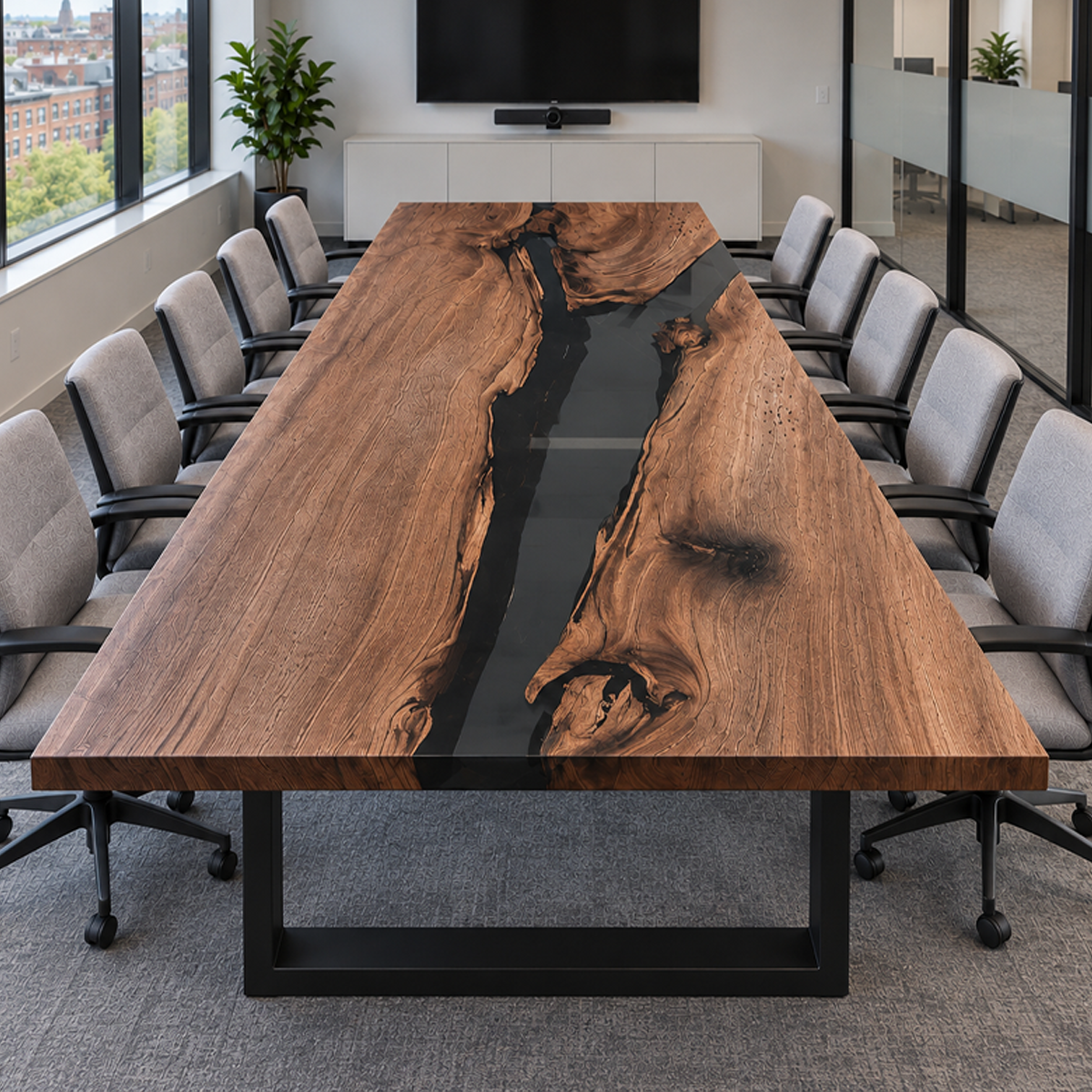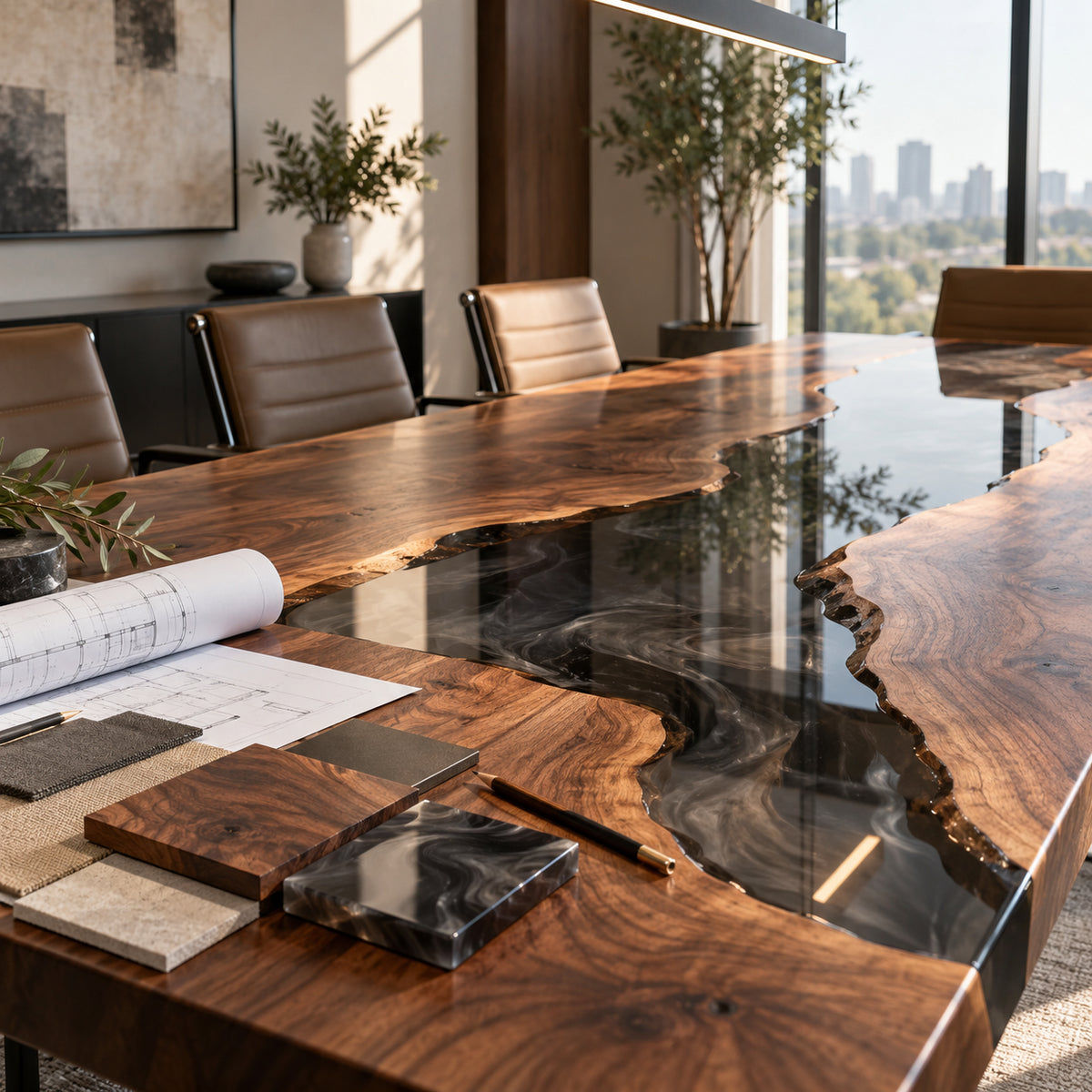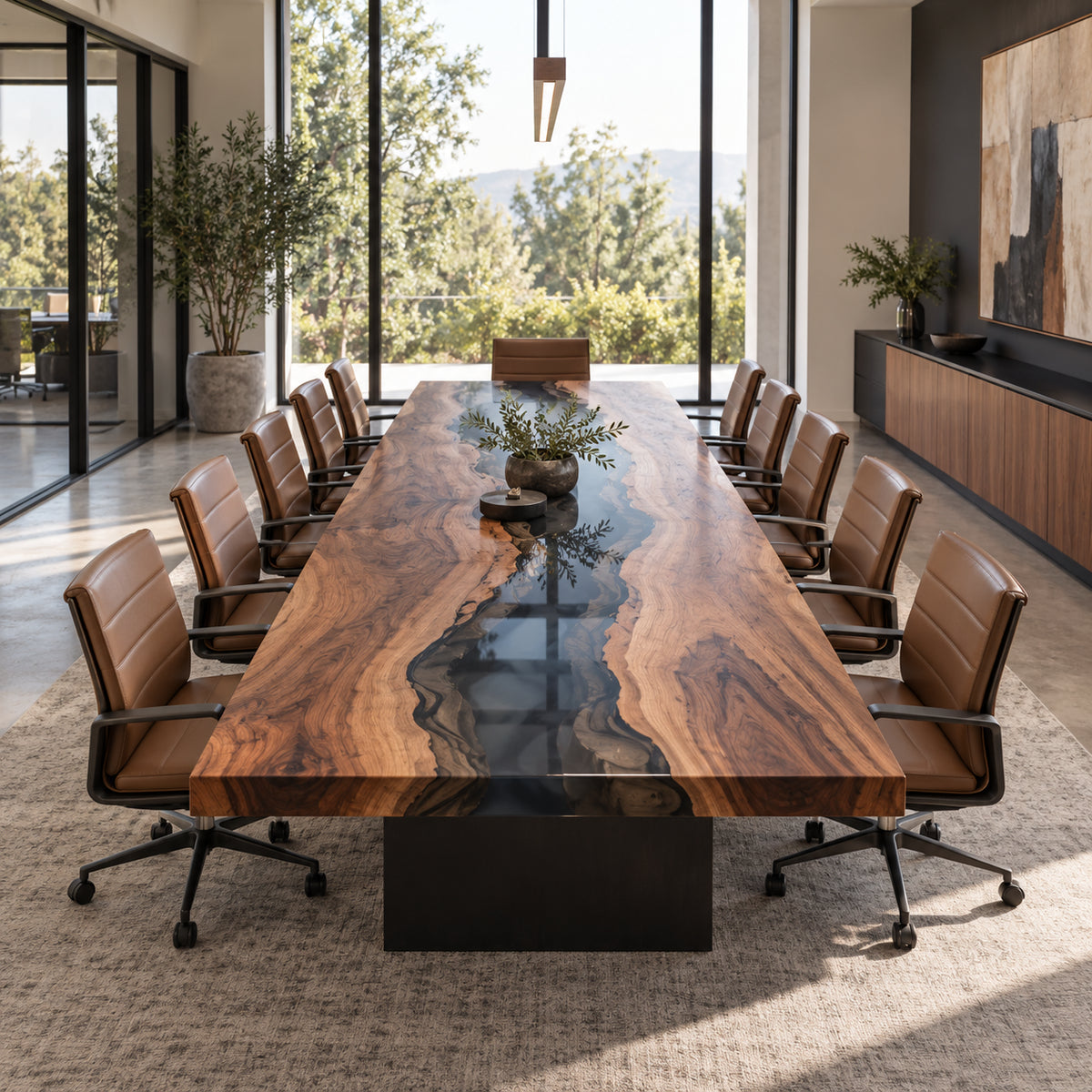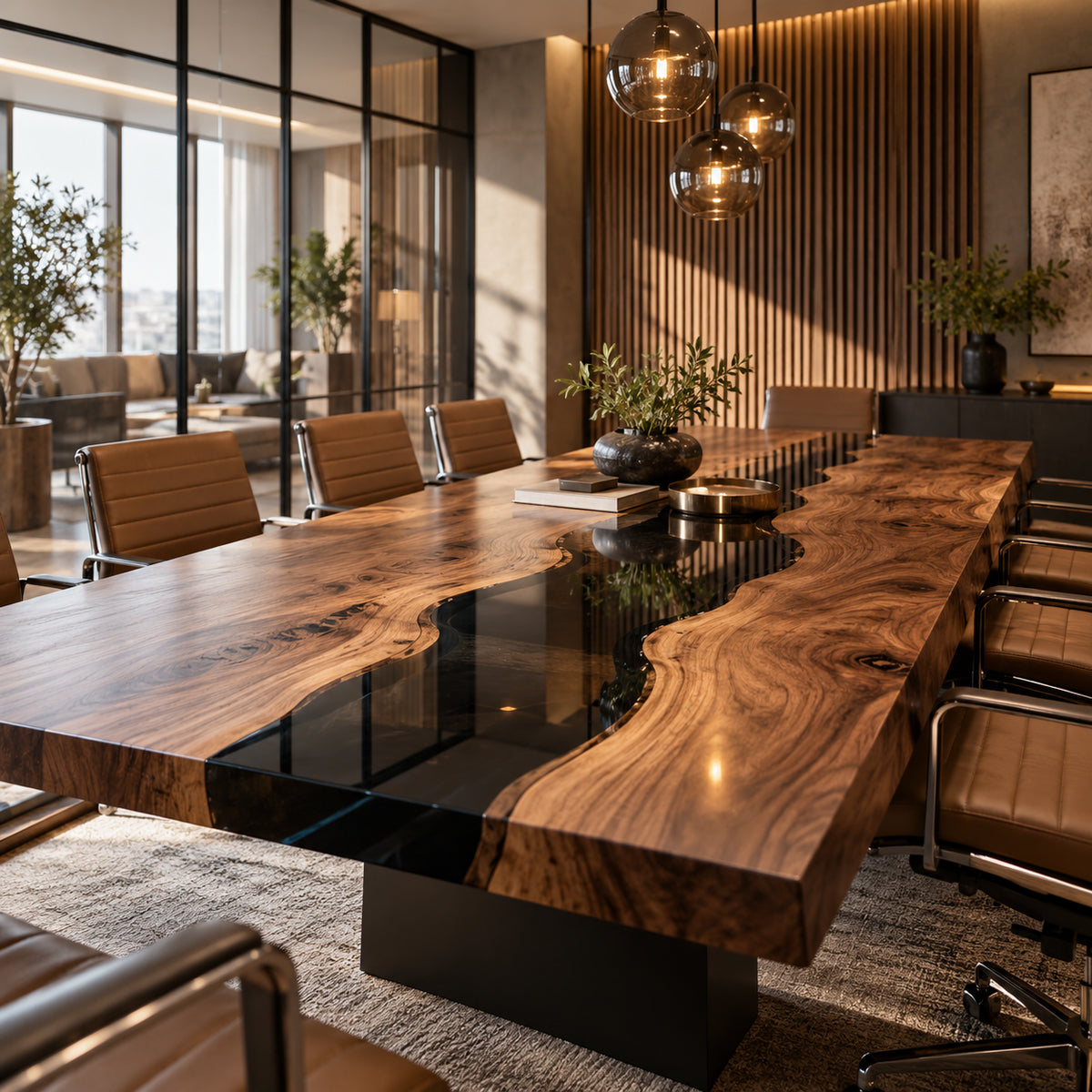
A wood and resin conference table can establish the visual direction of a meeting room. The challenge is giving the tabletop enough presence while keeping the room useful for conversation, reading, and presentations. Start with the existing materials, then compare the conference table collection against that setting.
Build a small material palette
Gather a flooring sample, a photograph of the chairs, and the wall color. Add any large fixed surfaces, such as a storage wall or acoustic panels. These are the materials the table will sit beside every day, so they make a better starting point than a collection of unrelated inspiration images.
Decide which element should attract attention first. If the resin pattern is the focal point, quieter chair upholstery and less busy flooring may help it read clearly. If the room already has a patterned carpet or an expressive wall finish, a more restrained tabletop composition is one option to consider.
Compare wood and resin as a pair
Look at the relationship between the wood tone and resin color rather than choosing each in isolation. A dark resin channel can create a different visual rhythm from a vivid blue river. The amount and placement of resin also matter: a narrow channel and a broad resin field can look very different even when their colors are similar.
The black walnut and transparent black resin conference table illustrates a wood-led composition with a central dark channel. It is a reference for color and pattern, not a guarantee that another slab will reproduce the same grain.
Consider daylight and working light
Observe the room during the times it is normally occupied. Windows, pendant fixtures, and ceiling lights may all be visible from seated positions. When comparing finishes, view any available sample from an angle similar to the view across a meeting table.
Keep presentation needs in mind. Note where people read printed notes and where they look at screens. Discuss lighting placement with the person responsible for the room; a photograph of an evenly lit interior cannot tell you how a particular finish will look under your fixtures.
Coordinate chairs without copying every detail
Chairs can repeat one element of the table, such as a base color, without matching the entire surface. A simple frame might echo the base while upholstery introduces a softer texture. Compare the complete chair silhouette with the proposed table base so that the arrangement feels intentional from the doorway as well as from a seat.
A useful review is to place the wood, resin, chair, and floor references together on one page. Remove options that only work when viewed alone.
Carry the design into the specification
After choosing a direction, use the conference table design brief checklist to record it alongside layout and equipment requirements. If you are uncertain whether a particular color, finish, or base is available for your configuration, ask Woodzio about the option before treating it as part of the order.