A conference table can fit the room yet leave too little usable space for an open report, handwritten notes, and a shared drawing. Before choosing from the WOODZIO epoxy resin conference tables, rehearse a meeting on a temporary surface. The aim is to find where documents need to sit and move, then turn those observations into a specific table requirement.
Bring the actual meeting pack
Choose one recurring meeting that involves paper. Gather its usual materials: a bound report, loose sheets, a laptop, notebooks, and any samples people compare. Open them as participants normally would. A closed folder gives a misleading impression of the space needed once pages are spread out.
Separate personal materials from shared ones. A notebook may remain beside one participant throughout the discussion, while a drawing needs to move between several people. List both groups before deciding what the middle of the table must accommodate.
Sketch three working areas
On a paper plan, mark an individual working area at each proposed seat, a shared review area, and a temporary holding area for documents waiting their turn. These are planning marks, not permanent divisions or features supplied with a table.
Use the proposed dimensions and actual chair positions for the test. If they are not yet confirmed, label the plan provisional. Try the arrangement on an existing surface or a full-size paper mockup; keep adhesive and marking tools off finished furniture.
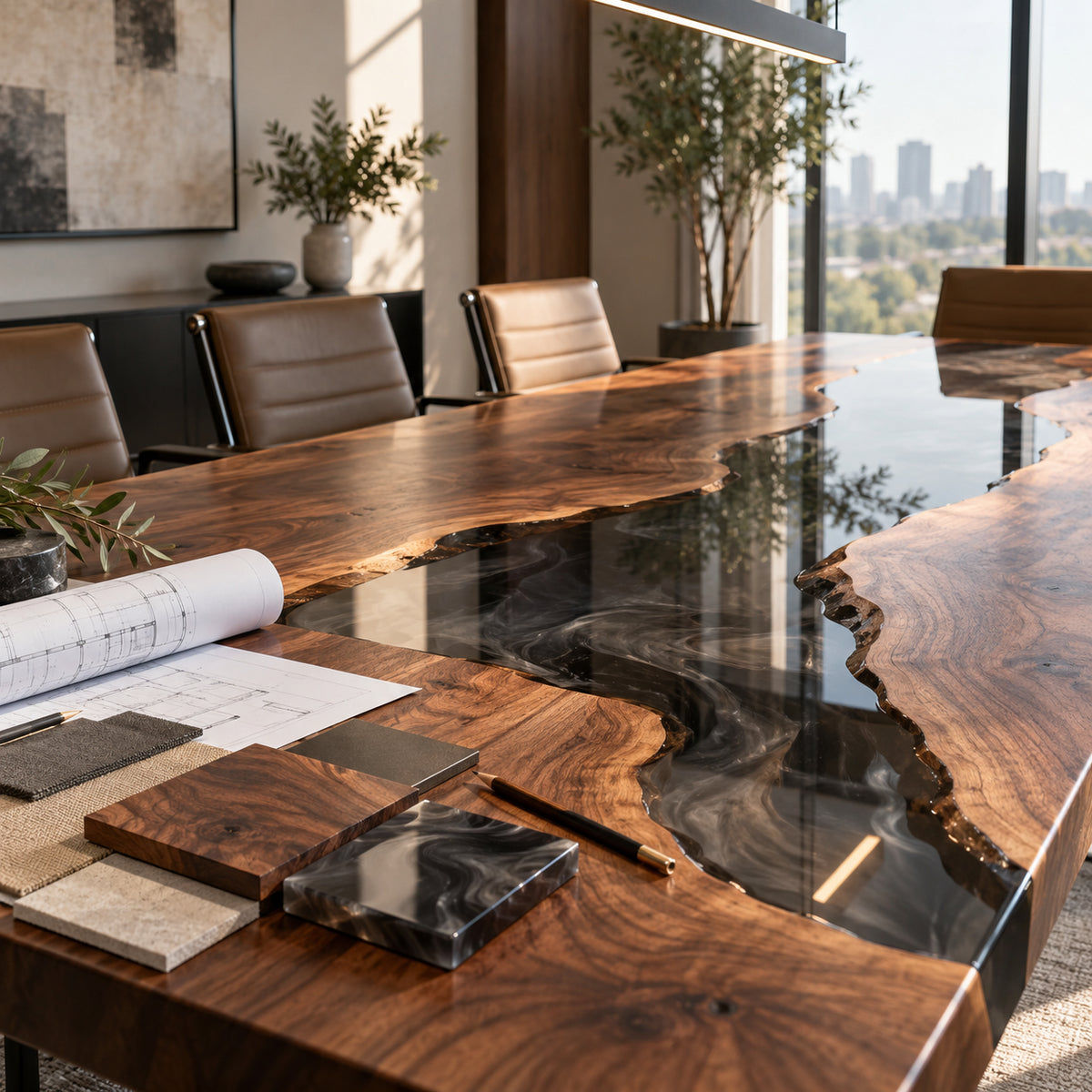
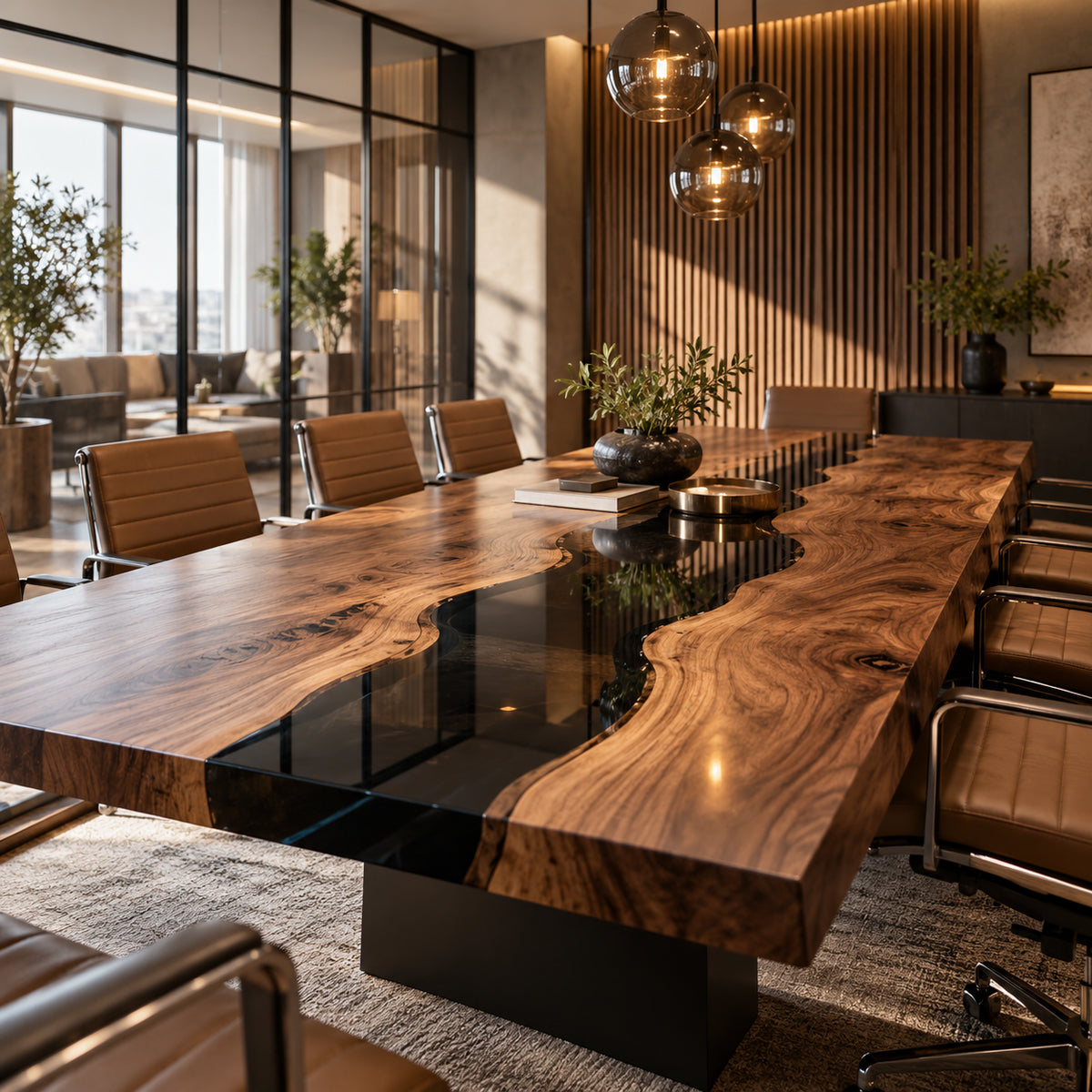
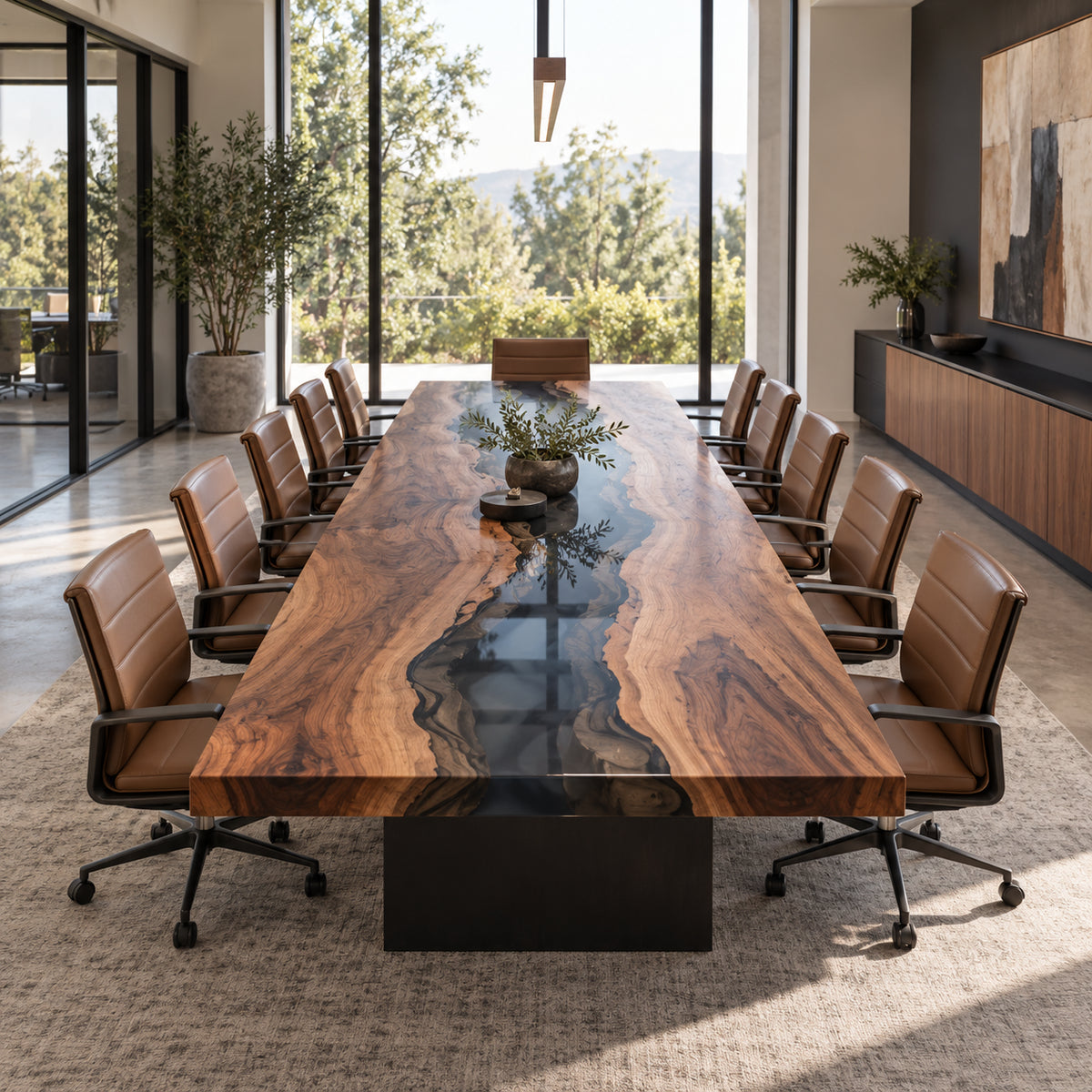
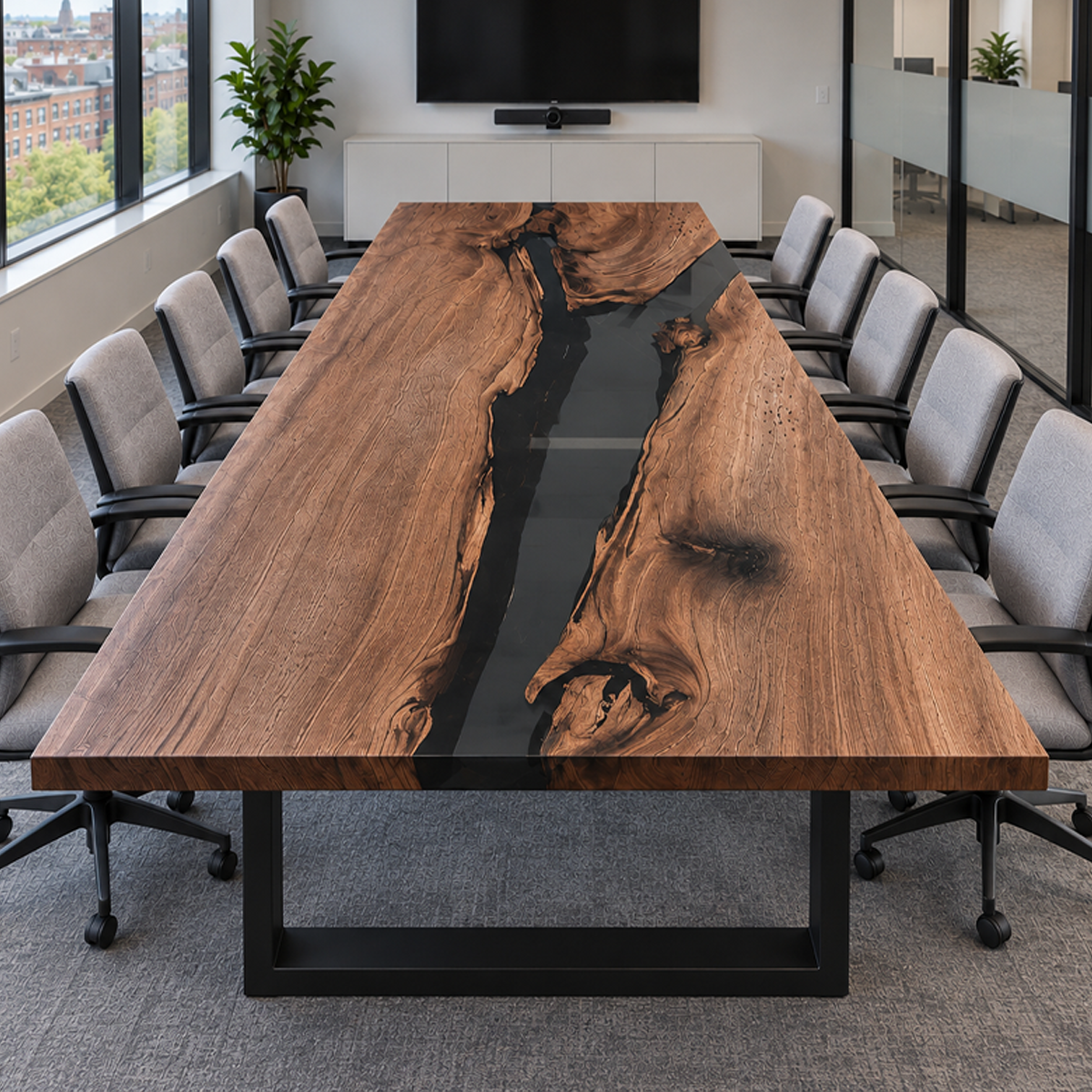
The rectangular black walnut and transparent black resin conference table provides a visual reference for a long surface with a central channel. Its resin pattern need not define the working areas. Choose document positions through the rehearsal, then consider how much of the composition remains visible.
Follow a document through the agenda
Start with participants reading their own copies. Next, introduce a shared sheet that needs annotation. Then test a comparison between two open documents. Ask whether the person speaking can point to the relevant detail without shifting someone else's laptop or covering their notes.
Try passing the sheet along the edge as well as placing it centrally. Where repeated reaching becomes awkward, consider providing another copy or changing the review method. Record the specific difficulty rather than assuming a larger table will solve every problem.
Include the change between topics
At the end of one agenda item, move its papers to the holding area and bring out the next pack. Check where closed laptops, used notes, and reference materials accumulate. This transition may reveal a space requirement that an empty-table photograph cannot show.
Photograph the rehearsal from opposite seats and note which arrangement was tested. Keep equipment and cable positions visible in the record; discuss any requested furniture alterations separately rather than assuming openings or integrated components are included.
Record what the test changed
Summarize the documents used, the troublesome handovers, and the proposed surface arrangement. Add those notes to the conference table design brief checklist. When submitting a custom table inquiry, ask WOODZIO to review the available configuration against that record. Confirm the final top, base, and equipment details before treating the rehearsal as an approved design.