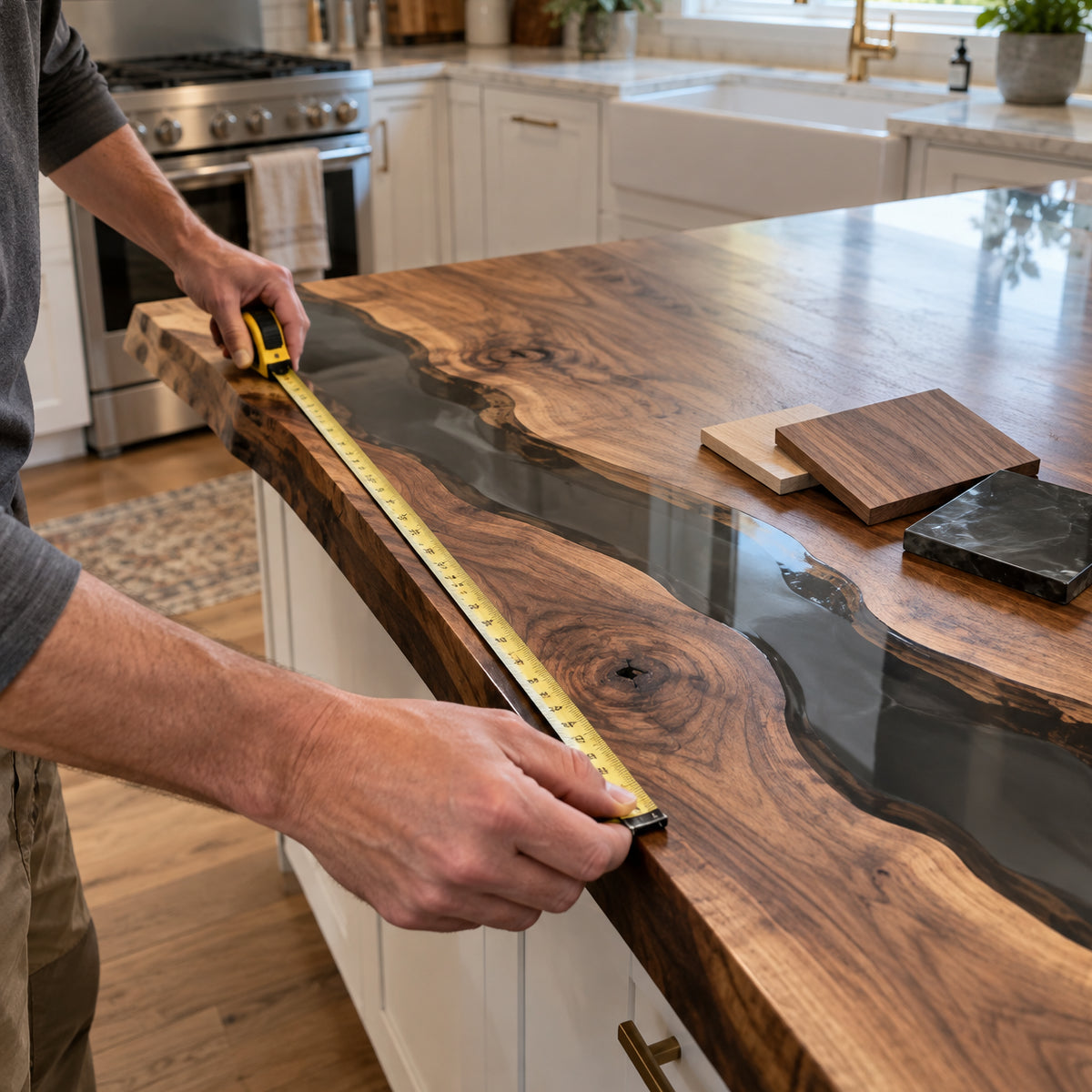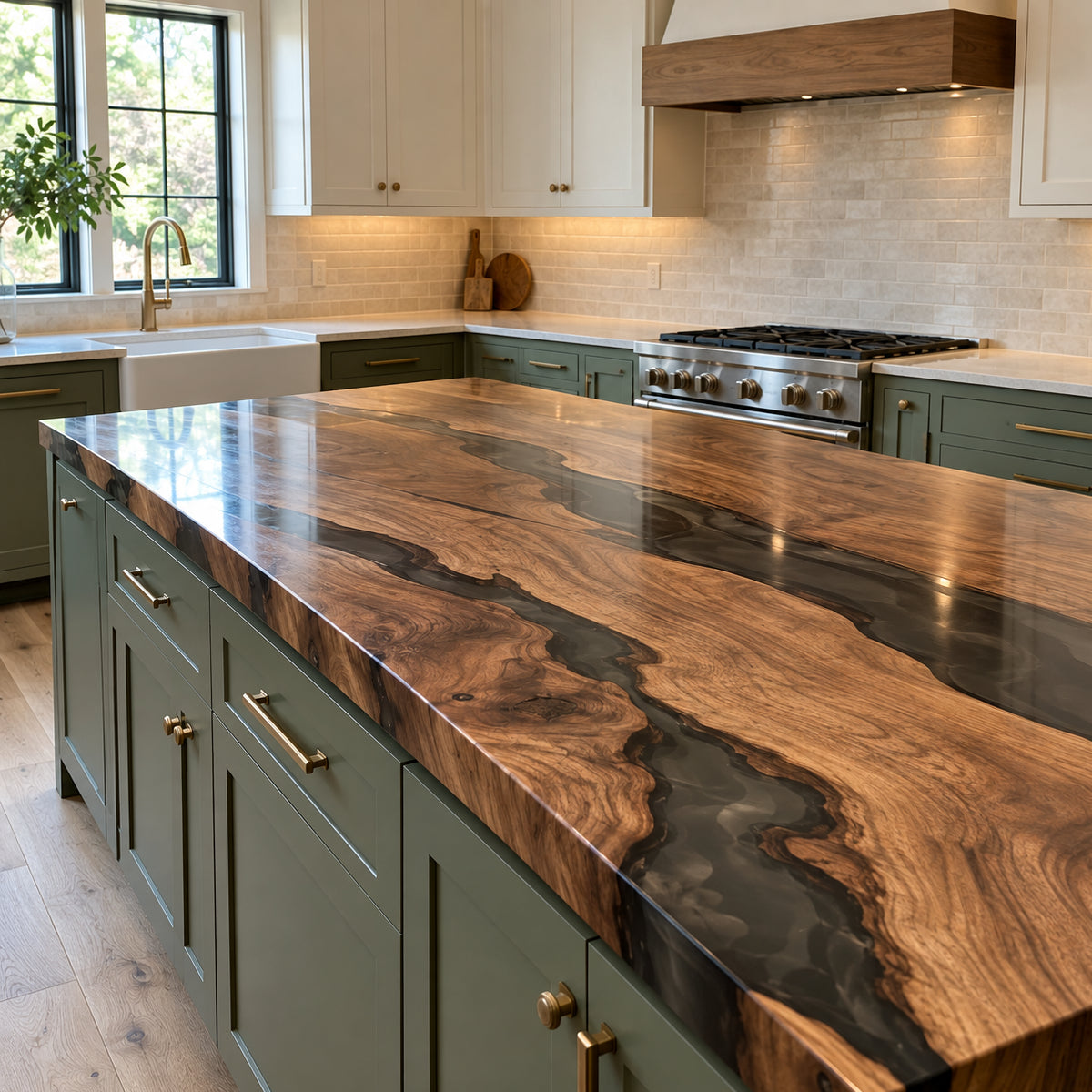
A countertop sits beside several large surfaces: cabinet fronts, flooring, walls, and sometimes a backsplash. When the top includes both wood and resin, it helps to choose a clear relationship between these materials. Compare the wood and epoxy countertop designs with the finishes already present in your kitchen.
Decide which surface should lead
If you want the countertop to be the focal point, consider quieter cabinet fronts and fewer competing patterns nearby. If a patterned backsplash or colorful cabinetry already leads the room, a more restrained resin composition is another direction to explore.
Make these decisions on a material board. Add cabinet, floor, wall, and hardware references, then place the countertop reference beside them. Look at the whole arrangement before deciding that an individual color is the right choice.
Compare wood tone with cabinet tone
Wood surfaces do not need identical grain to feel related. Try comparing their overall lightness, warmth, and pattern scale. A wood countertop beside wood cabinetry can look different from the same top above painted cabinet fronts.
For a strong color reference, the walnut and swirling blue resin kitchen bar cabinet design combines a wood-led surface with a blue resin river. Use the visible composition to describe what you like, while confirming the actual materials and configuration for your inquiry.
Repeat the resin accent selectively
Try carrying the resin color into one modest detail, such as a vase or textile, before adding several matching objects. This gives you a way to connect the countertop to the room without making every surface equally expressive.
Compare resin references in the kitchen's daylight and evening light when samples are available. A screen image is useful for selecting a direction, but it should not be treated as an exact match to paint or cabinet samples.
Look at exposed edges and vertical faces
A waterfall-style end introduces a vertical surface as well as a horizontal one. Consider how it will appear from adjacent rooms and how it relates to cabinet doors. Record where you want wood grain and resin to remain visible, then discuss which details can be achieved in the proposed design.
Keep hardware and lighting on the board too. A base or cabinet handle can echo a small color detail without copying the tabletop pattern. Review the finish from seated and standing positions rather than only from an overhead image.
Confirm the specification behind the look
Use the countertop installation preparation checklist to connect the palette with measurements, supports, and appliance details. A coordinated image does not resolve those working requirements.
Once you have a direction, ask Woodzio about the available countertop options. Share the material board and mark the choices you consider essential. Confirm the agreed design and use guidance before relying on a styling reference as the specification.